
This is a placeholder. The contents is coming soon…
Follow me on:



Jesper Broe Photography

PZL-104 Wilga – Introduction
 17/04/2011
 PZL-104 Wilga
PZL-130 Orlik – Introduction
17/04/2011
PZL-130 Orlik
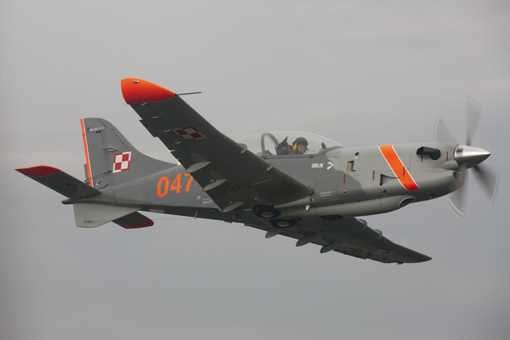 The PZL-130 Orlik is a two seat turbo-prop trainer used by the Polish Air Force. The Orlik is in the same class as the Pilatus trainers.
Specifications:
Crew: 2: student, instructor
Length: 9.30 m
Wingspan: 10.00 m
Height: 3.53 m
Empty weight: 1,825 kg
Loaded weight: 2,400 kg
Max takeoff weight: 2,950 kg
Engine: Pratt & Whitney Canada PT6A-25C turboprop, 750 hp
Maximum speed: 501 km/h
Range: 2,200 km
PZL-130 Orlik – 3-Views
13/11/2011
PZL-130 Orlik
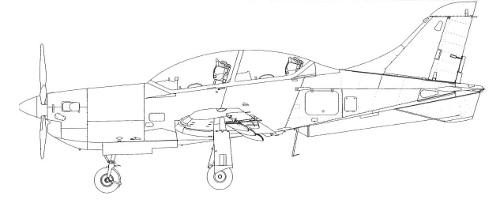 I got the 3-views on my latest trip to Poland. They look very detailed and complete.
PZL-130 Orlik – Model
13/11/2011
PZL-130 Orlik
The model will be in scale 1:5, giving a model size of:
Wing span: 2.00 m
Length: m 1.86 m
PZL-130 Orlik – CAD Import
13/11/2011
PZL-130 Orlik
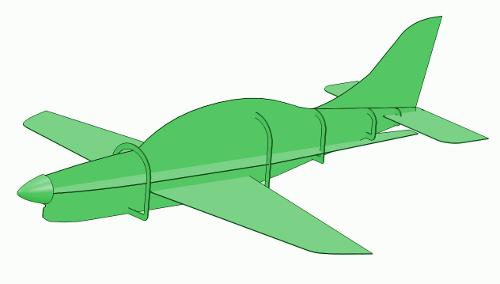 I started by importing the 3-views into Alibre CAD, and drawing the flat views. After that, I began drawing the fuselage formers.
For some reason, all the formers were drawn to different scales. I am used to cleaning up minor discrepancies on the 3-views I use, but this is extreme.
PZL M-28 Bryza – Plastic Kit
08/09/2012
PZL M-28 Bryza
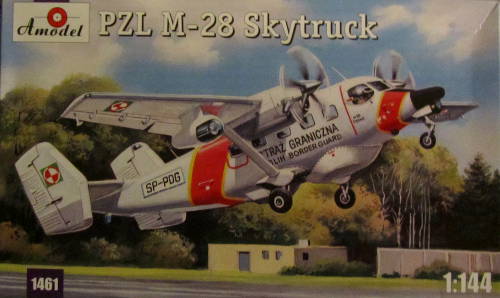 I bought this plastic kit of the PZL M-28 Bryza. Unfortunately it is scaled 1:144, so the amount of details is not too good.
SAAB 340B – Introduction
02/07/2010
SAAB 340B
 The SAAB 340B is a passenger/military transport plane, first flown in 1983. As a military aircraft, it is most often used with the Ericsson Earieye radar. I am, however, planning to model this as a passenger plane in Nok Air livery.
Specifications:
Crew: 2 pilots, 1 flight attendant
Capacity: 37 passengers
Length: 19.73 m (64 ft 8¾ in)
Wingspan: 21.44 m (70 ft 4 in)
Height: 6.97 m (22 ft 10½ in)
Wing area: 41.81 m² (450.0 sq ft)
Airfoil: NASA MS(1)-0313
Empty weight: 8,140 kg (17,945 lb)
Max takeoff weight: 13,155 kg (29,000 lb)
Maximum speed: 522 km/h (282 knots, 325 mph) at 4,575 m (15,000 ft)
Cruise speed: 467 km/h (252 knots, 290 mph) at 7,620 m (25,000 ft)
Stall speed: 164 km/h (88 knots, 102 mph) (landing flaps)
Range: 1732 km (935 nmi, 1076 mi)
Service ceiling: 9,450 m (31,000 ft)
Rate of climb: 10.2 m/s (2,000 ft/min)
Engines: 2 × General Electric CT7-9B turboprops.
SAAB 340B – 3-View
28/08/2011
SAAB 340B
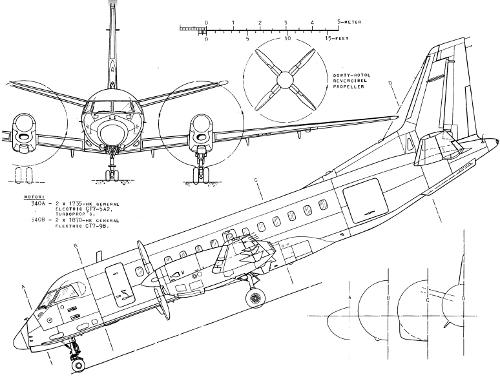 Directly from Sweden, I bring you…….. THE 3-VIEW
SAAB 340B – Status Update
02/07/2010
SAAB 340B
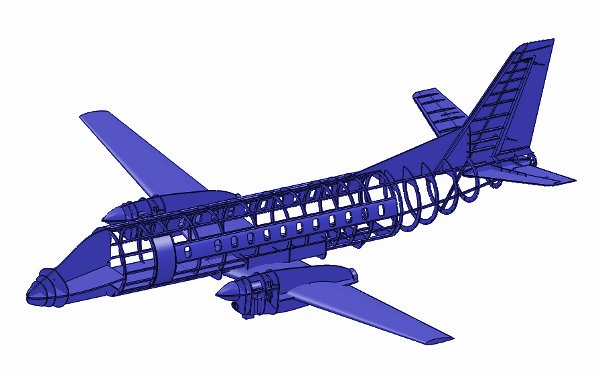 The picture shows the progress so far. I am getting close to completing this design. Some work still needs to be done with the nose, the engine nacelles, and landing gear.
SAAB 340B – Elevators
08/11/2010
SAAB 340B
I have updated the elevator design. I was afraid that the old design was structurally too weak. The elevator is almost 70 cm wide and requires sufficient strength. I have used a design similar to that used by David P. Andersen in his Arado.
After finalizing the elevators, I will be attaching the elevators to the fuselage using a crutch. It will require some “cutting” in the fuselage, so I will have to think it through carefully first.
SAAB 340B – Wing attachment
28/08/2011
SAAB 340B
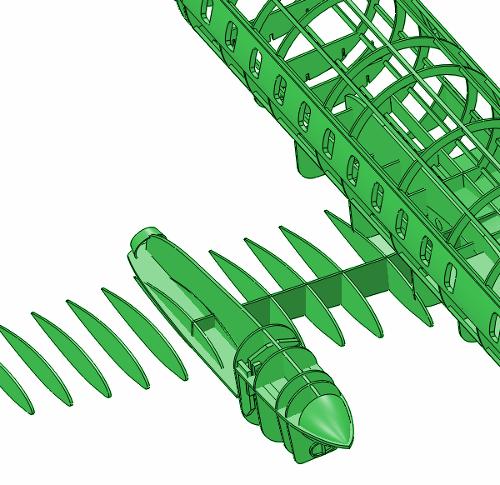 Now, for the wing attachment, I have a dilemma on my hands. The wings are at a 6.5 degree angle, and the engine nacelles are not, which gives a lot of headaches during the design phase. The wing does not go straight through the nacelle, but at a 6.5 degree angle. It would have been easier if the nacelle were round.
For now, I have decided to use a plywood spar for the centre section. This will give a strong centre section that can be bolted on to the main fuselage. The protrusion on the real aircraft will be part of the wing centre section, and there will be a piece missing in the fuselage where this can bolt onto. I will have to find a clever way to cover up the parting line between the fuse and the wing centre section, so that it will not be visible. Hopefully the colourful paint scheme used by Nok Mini will help conceal it.
The other decision I have taken is that the engines and their nacelles will also be part of the centre section. The entire centre section will be one strong assembly with engines, landing gear, and petrol tanks. The whole she-bang can be bolted on to the fuselage in one piece.
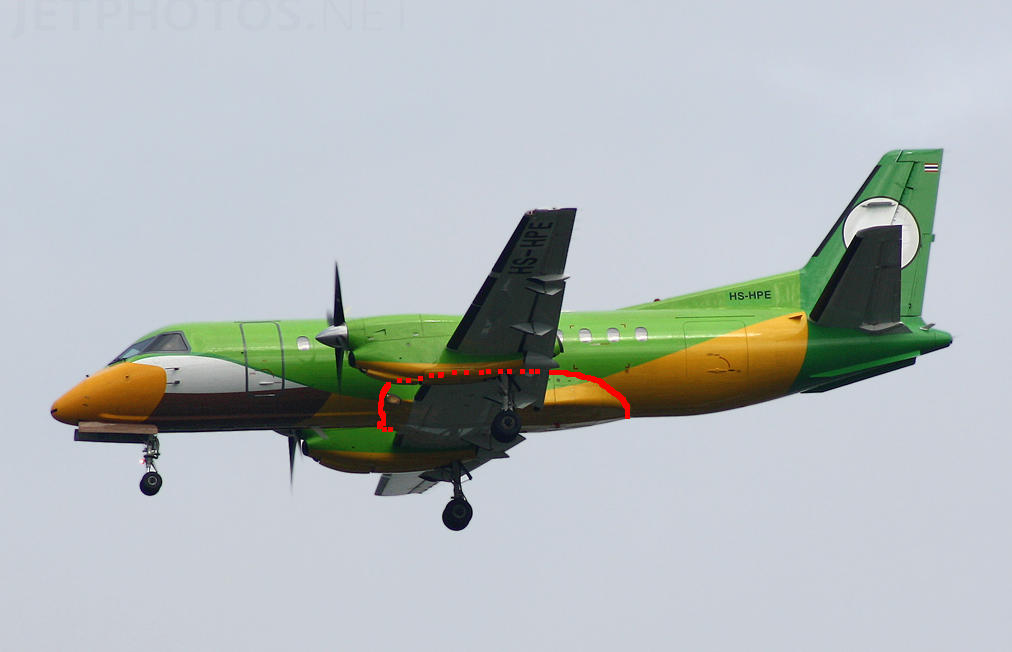 The only real drawback, is that the aircraft with the outer wing panels removed will have a width of about 75 cm and each outer wing panel about 70 cm each. Not exactly ideal.
SAAB 340B – Center section
02/10/2011
SAAB 340B
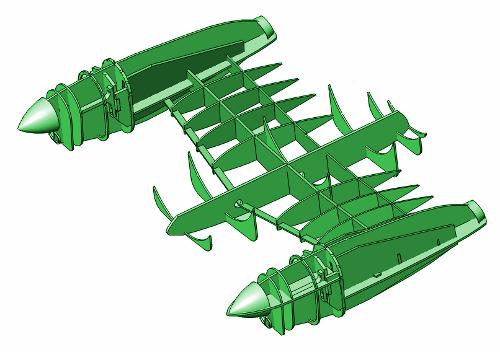 I have worked all day on the SAAB 340B centre section. As discussed in my previous post, the wing centre section will contain the two nacelles, and will be detachable from the fuselage. I solved the problem with the wing being angled at 6.5 degrees too.
Interestingly enough, part of the aircraft cabin floor will have to be built directly on top of this section.
Another thought I had was to build the wing/fuselage cover out of fibreglass and use it to hide the R/C receivers etc. Another way would be to keep the R/C equipment behind the cabin door. Let’s see how it goes.
I am worried about the strength of the centre section, as all the force from the engines will be distributed to the rest of the aircraft through it. I think I need to beef up this area a bit. Hopefully, if I let the wing attachment tubes go straight through the nacelles, that will help with the structural strength as well.
SAAB 340B – Twin-Engine
20/06/2012
SAAB 340B
This airplane is a twin-engine and for reliability reasons, I will be using electric brushless motors.
SAAB-340B – Cockpit
17/11/2012
SAAB 340B
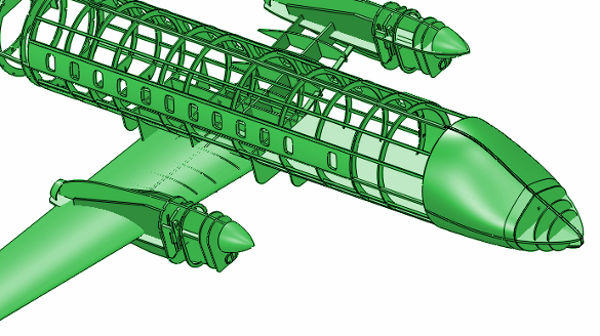 The last update on this aircraft was several months ago, and during that period, I have learned a lot of new skills, like keeping the cockpit in one piece, and using lofting for the wings. I have started updating the SAAB 340B design, to make it easier to complete. The first change was the cockpit area.
SAAB 340B – Related posts
05/04/2015
SAAB 340B

SAAB/MFI T-17 Supporter – Introduction
26/12/2009
SAAB T-17
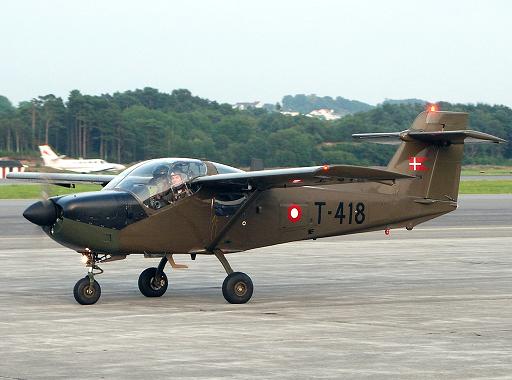 I have started a new project. It is a 1:5 scale SAAB T-17 model. I chose this plane because it is a simple construction, has no retractable landing gear and is a high-wing plane. It should be easy to design and build, and should fly like a trainer. It is also the first time I use fibre-glass and vacuum-forming, so it is also my ‘practice airplane’.
I’ll be using my standard construction methods, which is CAD based. When using CAD (and CAM), it’s extremely easy to make parts with notches and groves, which literally makes alignment of parts a snap. No more “this part must be places 5 cm from the leading edge”, kind of things.
Specifications:
Crew: 2
Wing-span: 8.70 m
Length: 7.0 m
Height: 2.60 m
Max Speed: 260 km/h
Range: 900 km
Weight – empty: 600 kg
Weight – loaded: 1200 kg
Armament (Trainer): None
Armament (Military): Rocket launcher
SAAB/MFI T-17 Supporter – 3-View
27/08/2011
SAAB T-17
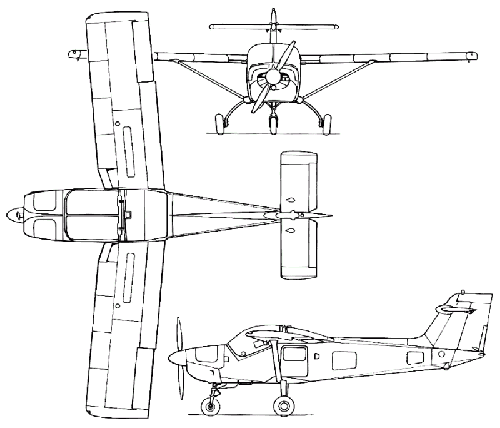 My 3-view comes from Arne in Sweden. One of the fabricators at SAAB that used to work on the Supporter. I have also had an extraordinarily huge amount of help from Thomas and Kjell Aa in Norway, who has flown the real thing.
SAAB/MFI T-17 Supporter – Wings
27/08/2011
SAAB T-17
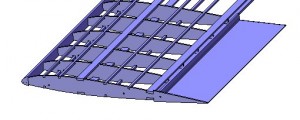 The wings of the SAAB/MFI T-17 Supporter are swept forward, for better visibility from the huge glass cockpit. Apart from that, they are basically straight, with the exception of a slat near the fuselage.
SAAB/MFI T-17 Supporter – Tail Assembly
27/08/2011
SAAB T-17
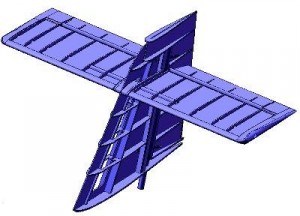
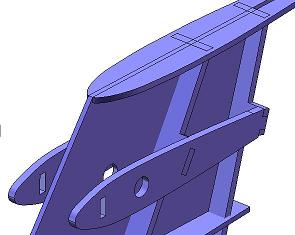 Just a few pictures of the tail assembly. They have been designed to be light, yet strong. The elevators are located at the top of the rudder, making strength a must.
SAAB/MFI T-17 Supporter – Fuselage Formers
27/08/2011
SAAB T-17
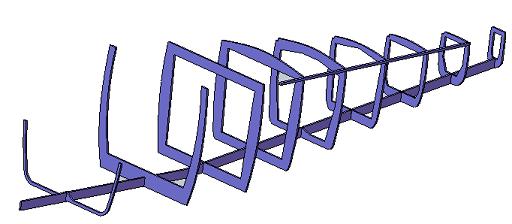 The fuselage former shapes came from Thomas in Norway. Thank you Thomas! Thomas has documented his build of a 45″ Supporter here.
SAAB/MFI T-17 Supporter – Engine
27/08/2011
SAAB T-17
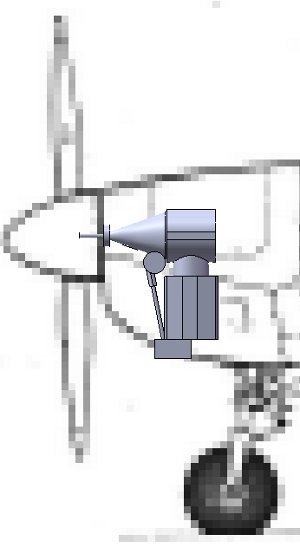 After consulting with some friends, I decided on the O.S.91 engine with a pump. It is a 4-stroke engine with lots of power for a model of this size, and just fits, if I make a fibreglass cowl. I drew a rough model of the O.S.91 in Alibre CAD to get a feel for its size.
SAAB/MFI T-17 Supporter – Cowl
27/08/2011
SAAB T-17
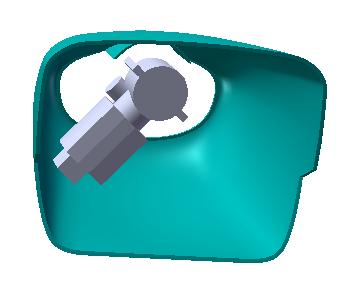
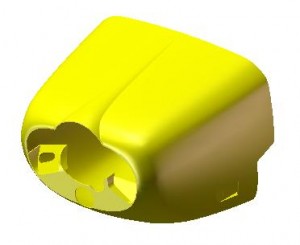 I had to work on the engine cowl, to make sure everything fits. After 2 days of struggle, here is what I came up with – front view and seen from the back with the OS91 engine. I probably went a bit overboard here, as all that is required to make a plug for a fibreglass mold is the outline. All the details and bumps are not necessary.
SAAB/MFI T-17 Supporter – Firewall
27/08/2011
SAAB T-17
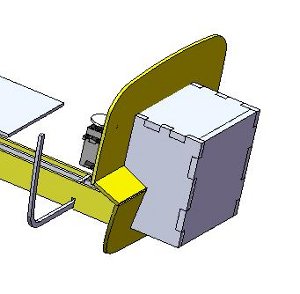 Next I made the engine mounting box. For an R/C scale aircraft, this must be made from pretty solid pieces of wood, to prevent the engine from ripping the aircraft apart. I had an “AHA” moment, when I realized the engine can be angled and turned up-side down to get the propeller axle at the top of the aircraft. The aircraft mounting box is slanted back to offset the angle of the engine mounts. I have placed a servo behind the firewall. This should be connected to the engine carburettor to adjust the engine speed.
SAAB/MFI T-17 Supporter – Much later…
26/12/2009
SAAB T-17
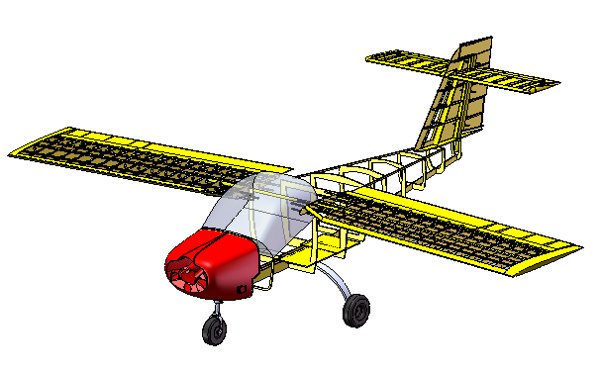 After about one month, I have got the following CAD drawing. I would have shown the design phase here, but due to a harddisk crash at the web-server, I have lost most of the documentation. I do, however, still have the design files and drawings.
SAAB/MFI T-17 Supporter – Review
07/09/2010
SAAB T-17
This is one of the aircraft I need to complete this winter. I have done a design review today, and I need to do the following:
- Add more longerons
- Re-enforce front of plane.
- Find wing mount that looks like original and at the same time can hide the servo wires.
- Add servo trays in wings, and for elevator and rudder.
- Make front landing gear so it has suspension and is steerable.
That’s about it for this plane. I will update this build-thread after I have fixed these.
IT IS SOON TIME TO CUT SOME WOOD.
SAAB/MFI T-17 Supporter – Fibreglass Cowl Plug
27/08/2011
SAAB T-17
To make the fibreglass cowl, I first made a plug with the exact shape of the actual cowl.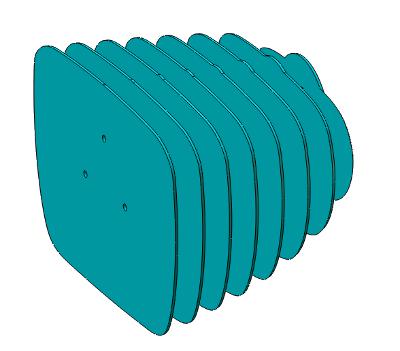
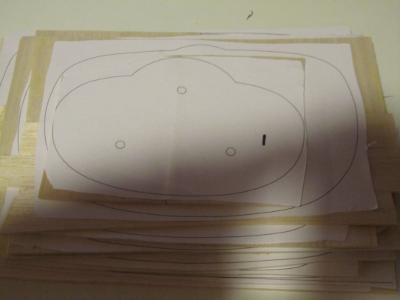 I did this by slicing the CAD model and printing out each slice.
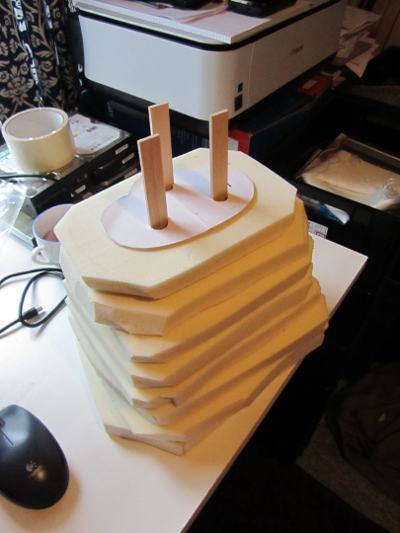 I then cut them out from wood and made a wood/PU-foam sandwich. PU foam is poly-urethane foam. It is similar to the green foam you can get from the florist, except it is much firmer. It can be cut and sanded without worrying about poking a finger through it.
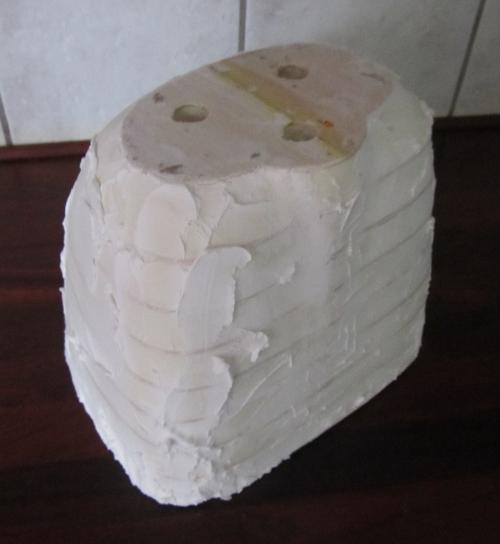
The wood/PU-foam sandwich was then sanded to shape. Any holes and bumps were then filled out and the plug was sanded again. This filling/sanding work continued until it was the right shape and completely smooth. The picture shows the plug after its first sanding/filling cycle.
The plug was then spray painted with an automotive primer. This made the plug real smooth, making any tiny imperfections visible. Filling and sanding was necessary once again.
SAAB/MFI T-17 Supporter – Photos
14/05/2012
SAAB T-17
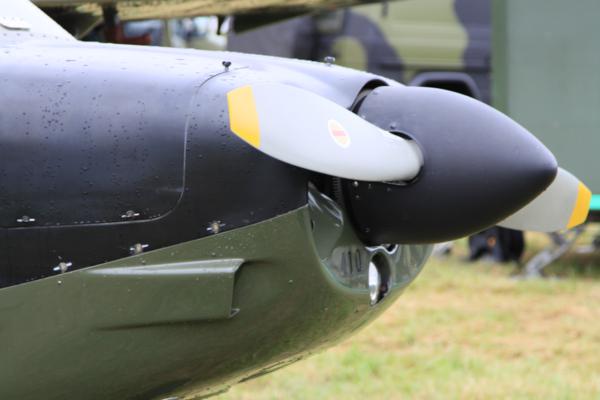
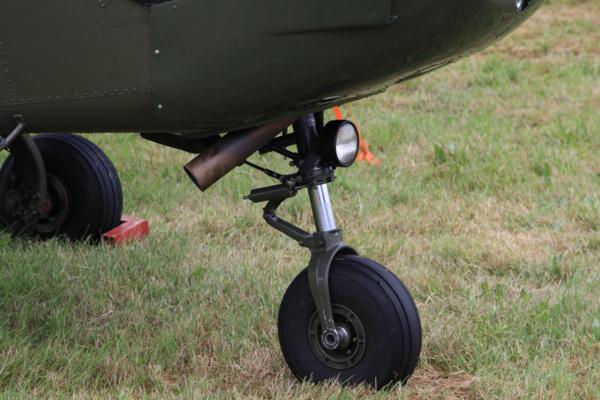
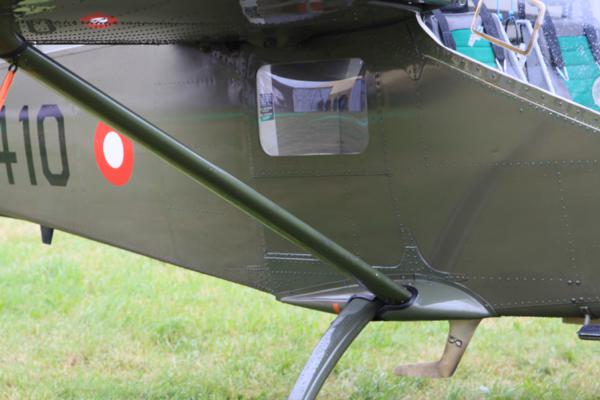
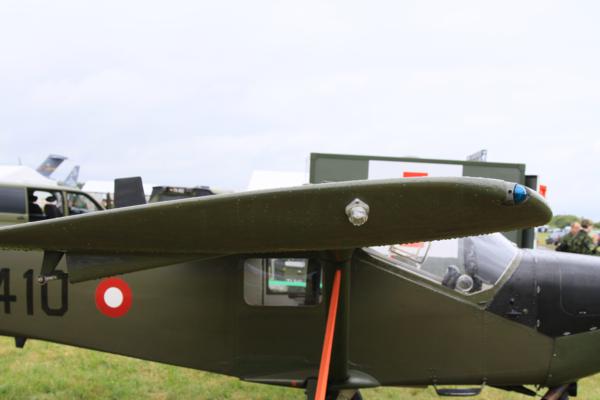
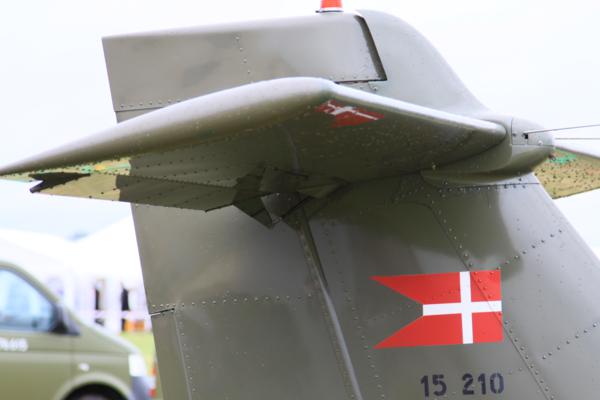
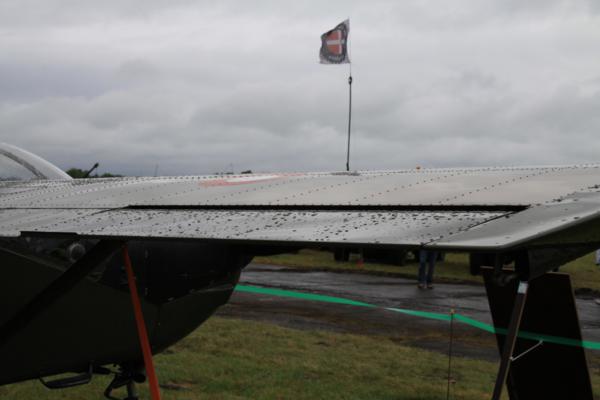
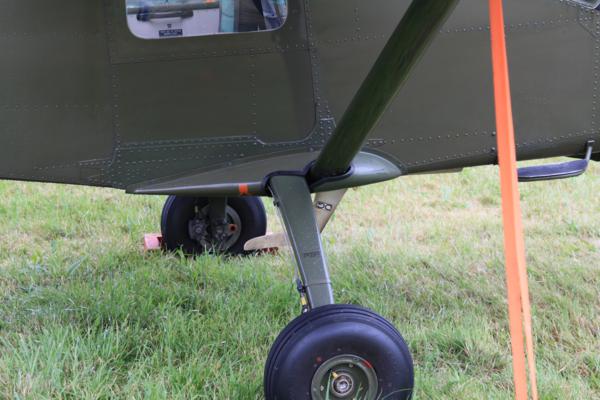
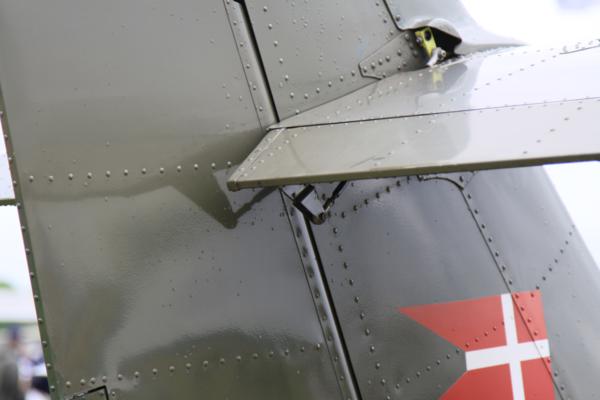
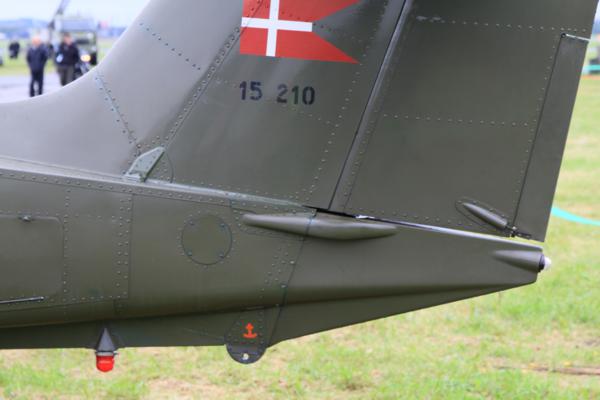
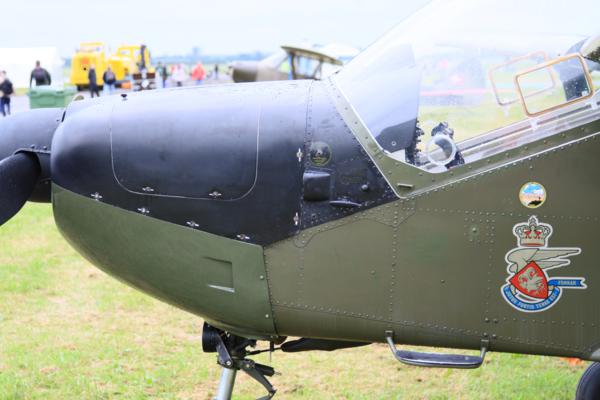
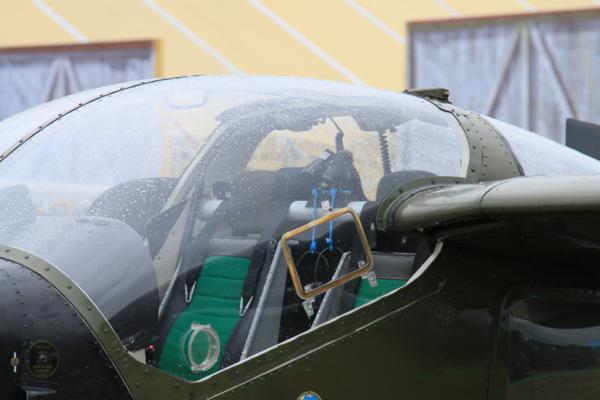
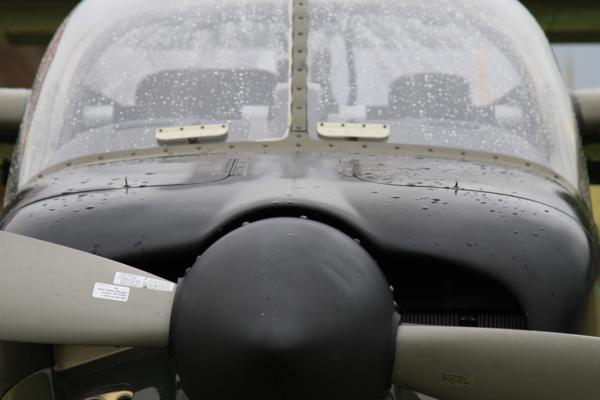
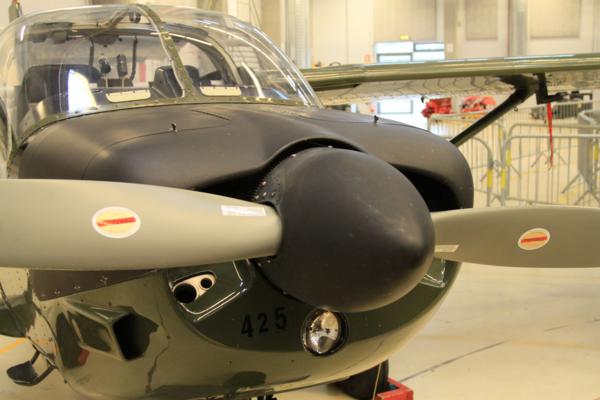
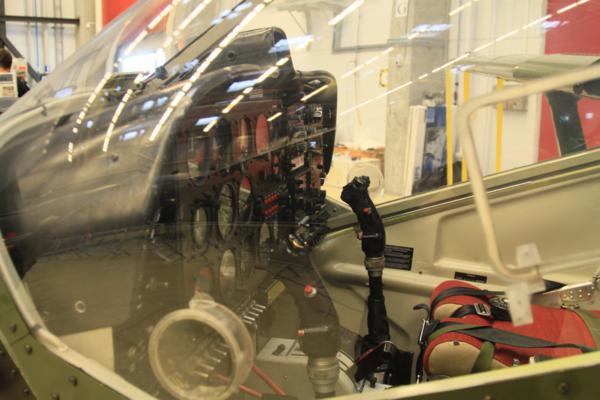
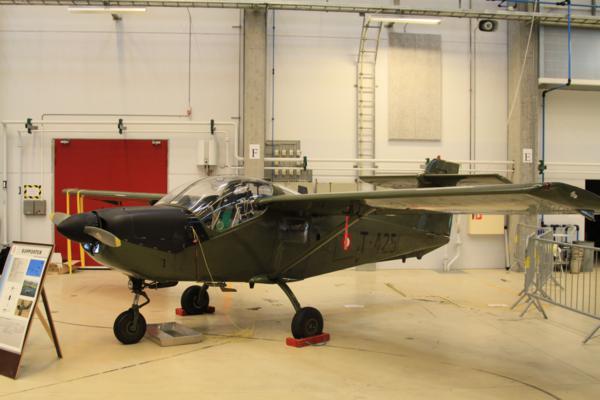
I went to an airshow in early June where they had some SAAB/MFI T-17 Supporters on display. These will surely help me complete this model.
SAAB/MFI T-17 Supporter – Related posts
05/04/2015
SAAB T-17
Scottish Aviation Twin Pioneer – Introduction
29/05/2011
Scottish Aviation Twin Pioneer
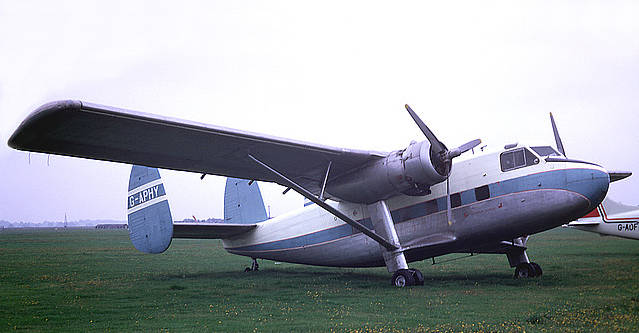 I first saw the Scottish Aviation Twin Pioneer (Twin Pin) at the Muzium Pengangkutan Melaka in Melacca, Malaysia, but didn’t think much of it. Years later I read about it in Aeroplane Magazine, and got hooked. I then went down to Malaysia again to see their Airforce Museum in Kuala Lumpur, but it was in the middle of Ramadan, and the museum was closed.
In this project, I have used the 3-View from the Aeroplane magazine and I plan to go to England to take some photos of the Twin Pin this summer.
The Twin Pin is a STOL aircraft used by the RAF as a transporter, mainly in Malaysia during the communist insurgence. Later the aircraft was bought by the Malaysian Airforce as well as other air-forces in the region.
Specifications
Crew: Two (pilot and co-pilot)
Capacity: Up to 13 troops or 2,000 lb (907 kg) of cargo
Length: 45 ft 3 in (13.79 m)
Wingspan: 76 ft 6 in (23.32 m)
Height: 12 ft 3 in (3.73 m)
Wing area: 670 ft² (62 m²)
Empty weight: 10,062 lb (4,564 kg)
Loaded weight: 14,600 lb (6,622 kg)
Max takeoff weight: 14,600 lb (6,622 kg)
Powerplant: 2× Alvis Leonides 531 radial engine, 640 hp (564 kW) each
Maximum speed: 143 knots (165 mph, 266 km/h)
Range: 695 nm (791 mi, 1,287 km)
Service ceiling: 20,000 ft (6,098 m)
Rate of climb: 1,250 ft/min (381 m/min)
Scottish Aviation Twin Pioneer – 3-View
29/05/2011
Scottish Aviation Twin Pioneer
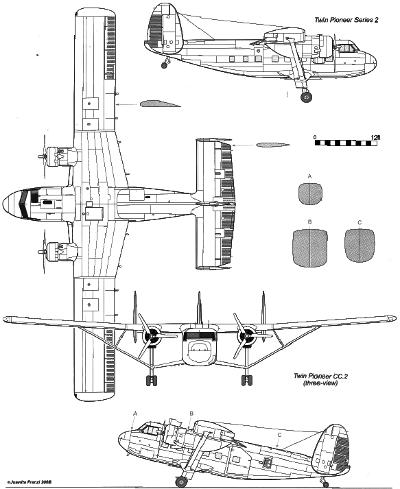 As explained earlier, I am using the 3-View from the Aeroplane magazine. I always find these to be accurate, but with very few fuselage formers.
Scottish Aviation Twin Pioneer – Documentation
27/08/2011
Scottish Aviation Twin Pioneer
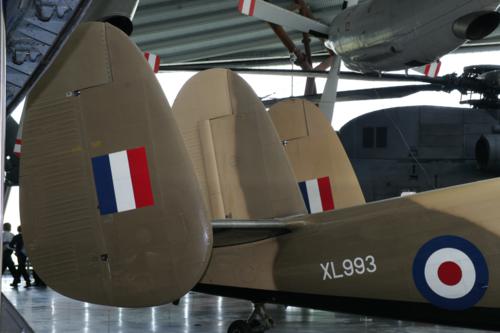
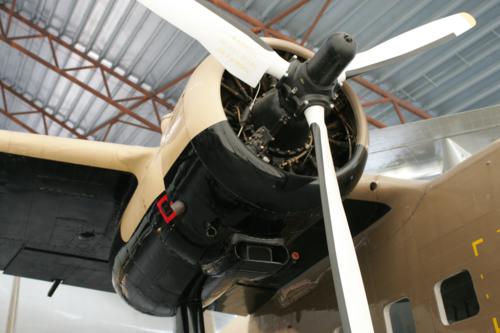
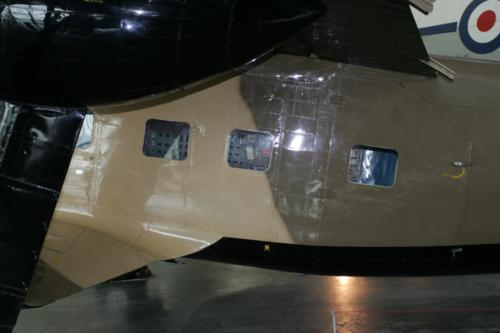
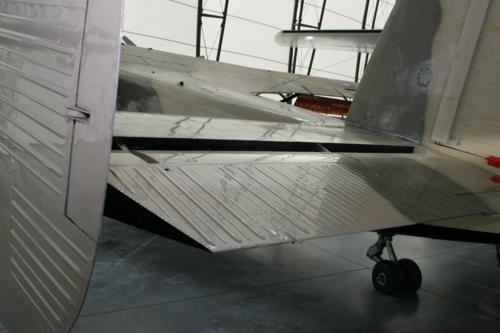
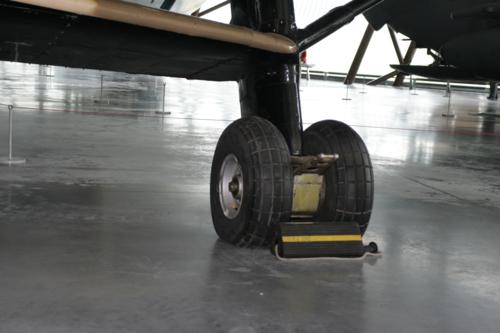
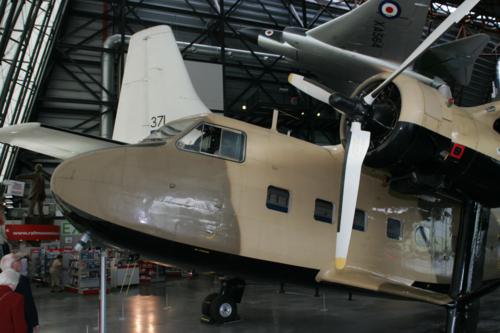
I have now been to the UK to take some photos of this great aircraft. It now resides at the RAF Cosford Museum and it was in really great conditions. I have posted a small walk-around here.
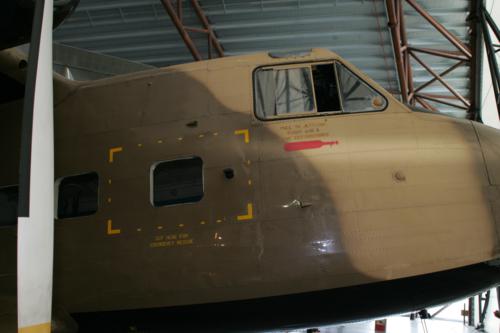
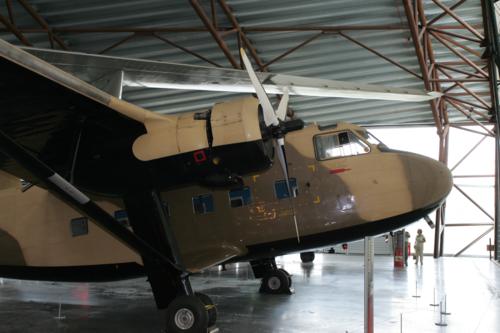
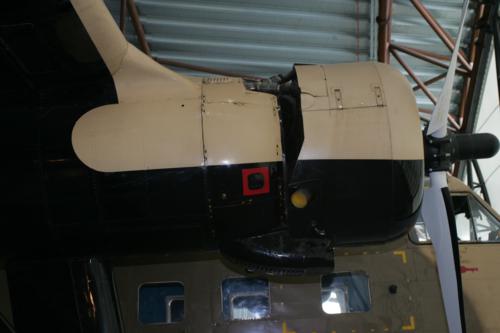
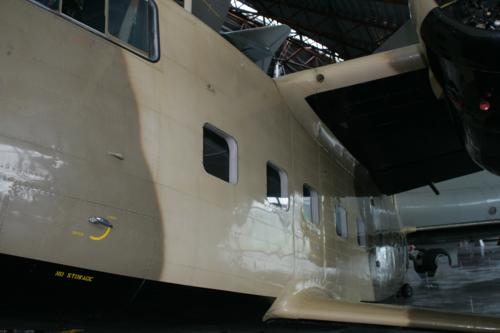
Scottish Aviation Twin Pioneer – Status update
27/08/2011
Scottish Aviation Twin Pioneer
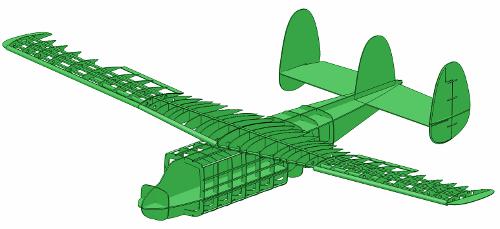 This is the status as of today. Basically the wings and parts of the fuselage have been completed. Next should be to add the ailerons etc. to the wings, so that that can get out of the way.
Scottish Aviation Twin Pioneer – Rear fuselage
23/12/2012
Scottish Aviation Twin Pioneer
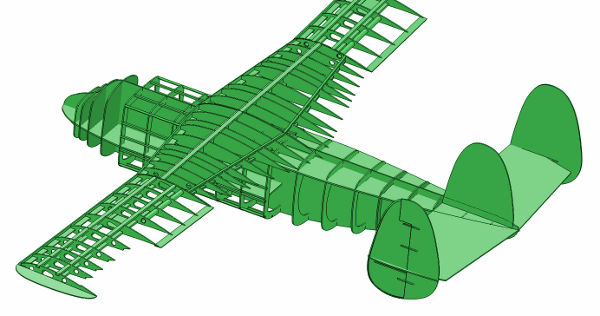 The rear fuselage formers have now been drawn. With the help of some photographs, it proved quite straightforward.
Scottish Aviation Twin Pioneer – Related posts
05/04/2015
Scottish Aviation Twin Pioneer
Short SB.6 Seamew – Introduction
07/08/2010
Short S.B.6 Seamew
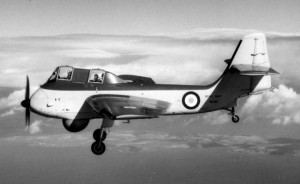 The Seamew was designed as a cheap, lightweight, and simple anti submarine patrol aircraft. The idea was that a large number would be needed to protect ships and harbours. The Fleet Air Arm issued Specification M.123 in 1951 and Shorts designed the SB.6 around it. The design was selected and orders placed in 1952. The first prototype flew on 13/8/1953. The RAF decided that it could use the Seamew to supplement the Shackleton (and Lancaster) for shorter range patrols.
An order was placed in Febuary 1955 for 60 aircraft (split down the middle between the FAA and RAF), and naval service flight trials were carried out with 200 take offs and landings on HMS Warrior. The RAF quickly lost interest, and budget cuts killed off the project. All 18 aircraft build were scrapped.
I’m going to make this plane, only because it is so damn ugly.
Short SB.6 Seamew – 3-View
08/09/2010
Short S.B.6 Seamew
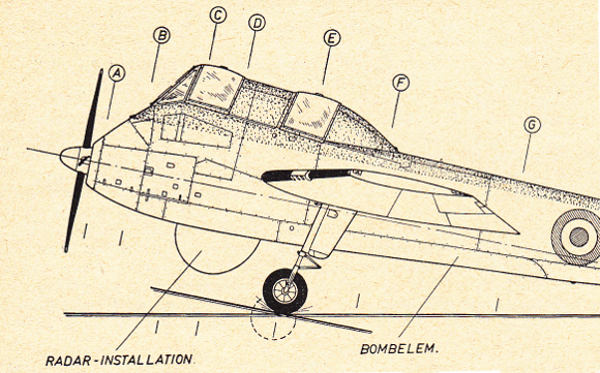 I have found a great 3-view of this aircraft in an old Swedish magazine. It was drawn by my countryman E. Tage Larsen and it is perfect for this use.
Short SB.6 Seamew – Scale Dimensions
15/11/2012
Short S.B.6 Seamew
Just like the deHavilland DH-104, this is one of those aircraft that have a size where 1:10 is too small, and 1:5 is too large. This aircraft is ideal for competition, but it must be above 80 inch (2 meter). In the end, I decided on 1:10, giving a size of:
wingspan: 1676 mm
length: 1250 mm
Short SB.6 Seamew – Project start
15/11/2012
Short S.B.6 Seamew
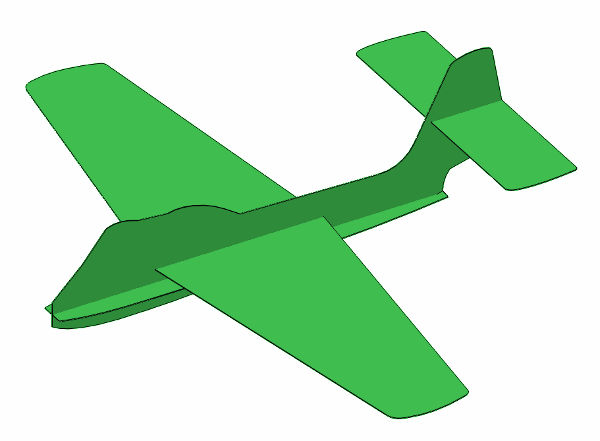 As always, I align the 3-views and check that it all fit together well. Luckily it does. It already looks like a Seamew.
The exercise also taught me that the plane is actually of a really simple construction. The mid-section of the fuse is a basic tube, the elevator is a candy bar, and the wings are almost as simple. It looks like all the complexity is in the cockpit, but that’s actually two perspex bubbles on a fairly normal shaped fuselage.
I like it already.
Short SB.6 Seamew – Initial formers
27/12/2012
Short S.B.6 Seamew
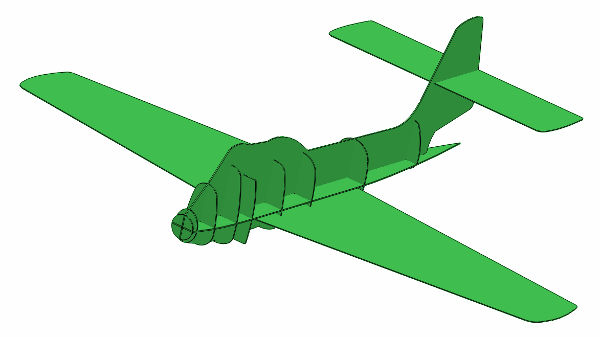 I have drawn the formers from the 3-view and added them to the project. They require quite a bit of cleaning up. The tail will be a challenge.
Short SB.6 Seamew – Related posts
05/04/2015
Short S.B.6 Seamew
Supermarine Nanok – Introduction
08/08/2010
Supermarine Nanok
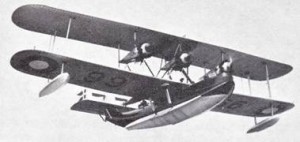 This extremely rare aircraft was commissioned by the Royal Danish Navy at Supermarine in Southampton, England in 1927. The plane did not live up to the specifications and its delivery was rejected. The aircraft was converted to a luxury 12-seat civil transport for the use of the Irish brewing magnate, Arthur Ernest Guinness, being renamed the Supermarine Solent.
There are extremely few photos of this plane, and most of them are now in my possession. Likewise is a 3-view, and I will in the coming months, attempt to build a model in scale 1:5.
Specifications
Crew: Five
Length: 50 ft 6 in (15.40 m)
Wingspan: 75 ft 0 in (22.86 m)
Height: 19 ft 6 in (5.94 m)
Wing area: 1,572 ft² (146 m²)
Empty weight: 10,619 lb (4,817 kg)
Loaded weight: 16,311 lb (7,399 kg)
Powerplant: 3× Armstrong Siddeley Jaguar IV 14-cylinder air cooled radial engine, 430 hp (321 kW) each
Maximum speed: 99 kn (113.5 mph, 183 km/h) at sea level
Stall speed: 56 kn (64 mph, 103 km/h)
Range: 557 nmi (640 mi, 1,030 km) Reconnaissance
Service ceiling: 10,920 ft (3,328 m)
Rate of climb: 607 ft/min (3.1 m/s)
Wing loading: 10.4 lb/ft² (50.7 kg/m²)
Power/mass: 0.079 hp/lb (130 W/kg)
Guns: 2 × .303 in (7.7 mm) machine guns
Bombs: 2 × 1,534 lb (700 kg) torpedoes
Supermarine Nanok – Model
02/11/2011
Supermarine Nanok
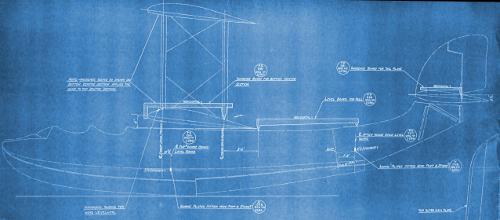 I have gotten a 3-view from an old air force book with rigging information. Unfortunately it is not very detailed, but together with photos of a restored wooden Supermarine aircraft at the RAF museum in Hendon, I think I should have a shot at it. Obviously, since there are so few photos of the aircraft, quite a bit of “educated guesses” will probably be necessary.
The scale will be 1:10, giving a size of:
Length: 1.54 m
Wingspan: 2.286 m
Height: 0.594 m
Supermarine Nanok – Construction
02/11/2011
Supermarine Nanok
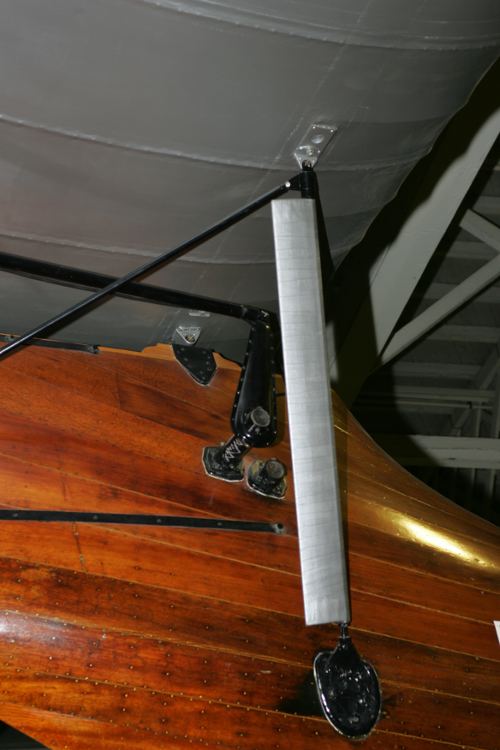 This is just a quick post to show the construction methods used by Supermarine on their wooden aircraft hulls. The photo is of a Supermarine Southampton Mk. I. The Supermarine Nanok was designed and built right after the Southampton. It is quite safe to assume that most of the design techniques used on the Southampton were reused on the Nanok. Note how the planking is immaculate, with every plank attached with brass screws to the underlying skeleton. It is also worth noting the construction of the metal parts.
Supermarine Nanok – Related posts
05/04/2015
Supermarine Nanok
Supermarine Sea Otter – Introduction
08/08/2010
Supermarine Sea Otter
The Sea Otter was procured from Supermarine in Southampton in England.
Please check in later for more details.
Supermarine Sea Otter – Related posts
05/04/2015
Supermarine Sea Otter
Tachikawa Ki-55 – Introduction
29/12/2009
Tachikawa KI-55 Ida
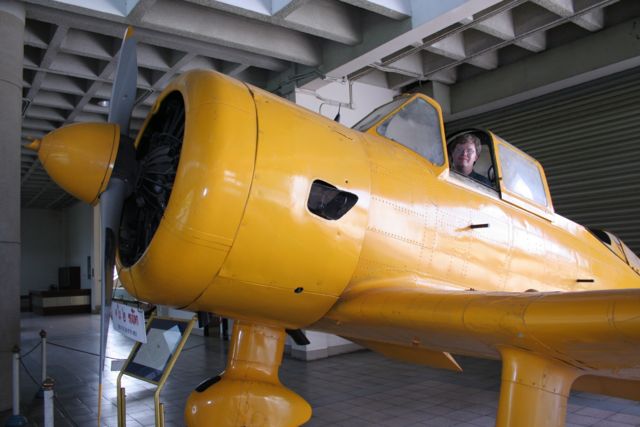 I have a special affection for this aircraft. I really don’t know why. It was the standard Japanese trainer in the time just around WWII. The last one lives here at the Royal Thai Air Force Museum, not too far from my home.
The Ki-36 (armed) and the Ki-55 (trainer) aircraft was designed in 1937 by a tream under chief engineer Endo Ryokichi, The final aircraft was approved by the Imperial Japanese Army Air Force in 1938. Exstensive flight-tests were conducted and in September 1938 two additional prototypes were build, bringing the total up to 4.
The aircraft had good forward visibility due to the 13 degree sweep of its wings. The engine was a 450 h.p. Hitachi Ha-13 with a two-blade variable pitch propeller. Armament consisted of one forward firing 7.7mm Type 89 machine gun, and one flexible drum-fed Type 89 machine gun for the observer. The aircraft could carry five 12.5 kg bombs, four 15 kg bombs, three 50kg bombs under each wing.
The aircraft had side and floor windows and a type 96 fixed camera with electrical heater could be installed.
The aircraft was used in Manchuria and over China in the beginning of the war, but it’s slow speed made it obsolete as a fighting machine early on, and it was converted into a trainer (the Ki-55). The trainer had dual-pedal, extra instruments and dual-stick installed in the read, and the rear machine gun was removed.
A total of 861 were produced.
Specifications
Wing span: 11.8 m
Length: 8 m
Height: 3.64 m
Wing area: 20 sq.m
Weight empty: 1247 kg
Weight fuelled: 1783 kg
Max speed: 348 km/h
Cruising speed: 236 km/h
Landing speed: 100 km/h
Range: 1235 km
Landing Distance: 291 m
Takeoff distance: 234 m
Tachikawa Ki-55 – 3-Views
05/01/2010
Tachikawa KI-55 Ida
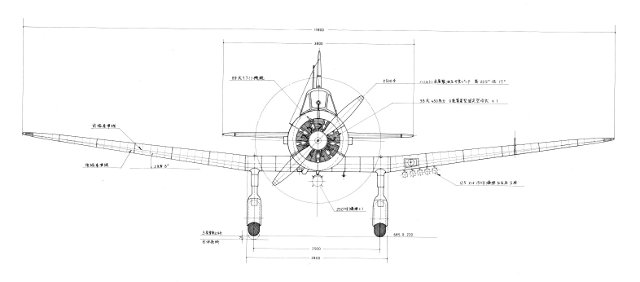 I have been studying this aircraft for almost 5 years now. I have collected a huge amount of data, including factory assembly drawings.
I have placed a video of this plane in the Video section. Be aware that the instrument panel and cockpit used in this video is actually the cockpit of the Ki-17 trainer. I guess the video editor screwed up, or thought noone would notice.
I bought a really expensive 3-view from a company in Japan that I wanted to use for the lofting of the fuselage formers. However, it turned out that the location of the stringers on the drawings were totally off and the formers were totally out of shape.
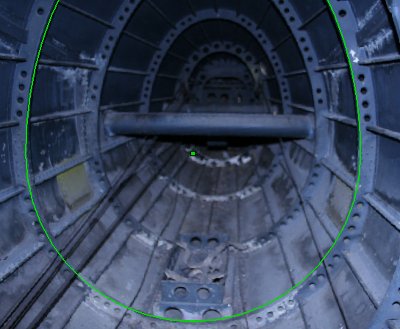
Next I went to the museum to get some photos of the Ki-55. This is what the fuselage looks like inside, looking back from the student’s/gunner’s seat.
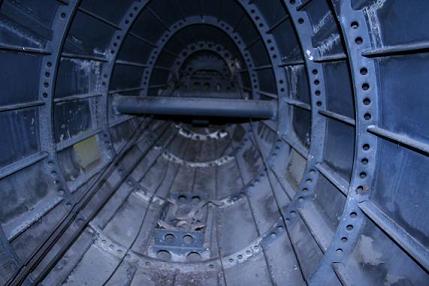
Using my paint program, I first traced the outline of the former. You can see that the picture was not taken completely centered.
Then I made two assumptions:
- The airplane is at it’s widest at the thrust-line/center-line.
- Engineers are lazy. They won’t use any weird curves. They will stick to circles, ellipses and hyperbolas, unless there is a compelling reason not to. Besides, that’s what would have been available on their sets of french curves.
I then took out my super-expensive 3-view imported from Japan, and measured the distance from the thrust-line to the top, bottom and side of the fuselage, and got:
Top: 119.2 mm
Bottom: 69.6 mm
Side: 75.5 mm
Finally, based on those measurements and my assumptions, I drew some ellipses and placed my “assumed shape” on top of the drawing traced from the photo.
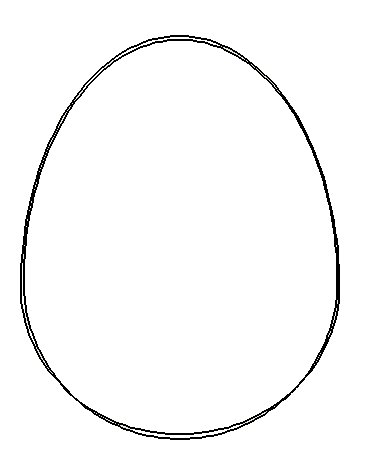
It’s an almost perfect match.
I now know how to draw the remaining formers. It’s two semi-ellipses centered at the thrust-line.
Tachikawa Ki-55 – Formers
05/01/2010
Tachikawa KI-55 Ida
I have now started lofting the formers. This is quite easily done; use the 3-view and measure the width and height at each former location, as shown on the attached photo. Then use the knowledge about the shape, i.e. see the previous post, and draw the formers.
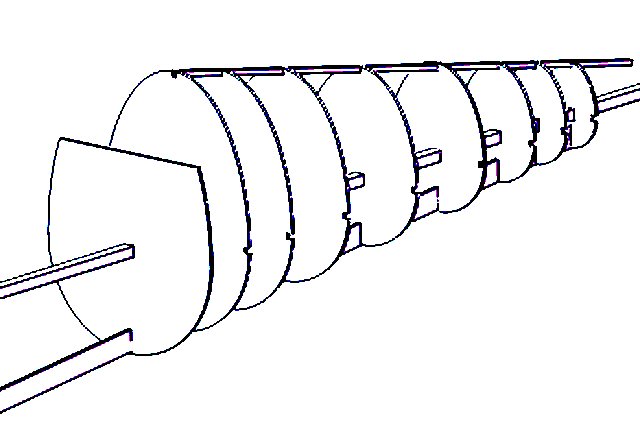 Here is what it looks like so far. The next bit is the fuselage at the cockpit section. At this point, I just concentrate on getting the correct external shape.
Tachikawa Ki-55 – Update
02/07/2010
Tachikawa KI-55 Ida
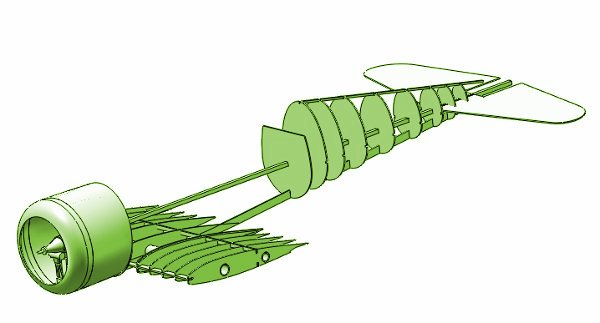 This is the latest update on this plane. It is slow going. Mostly because I am focusing on some of the other planes. In any case, I have got the cowl and the wing center section in place. I’m kind of strugging with the center part of the fuselage near the cockpit.
