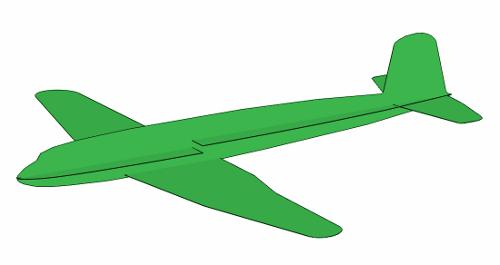
Fieseler Fi-167 – High-lift devices

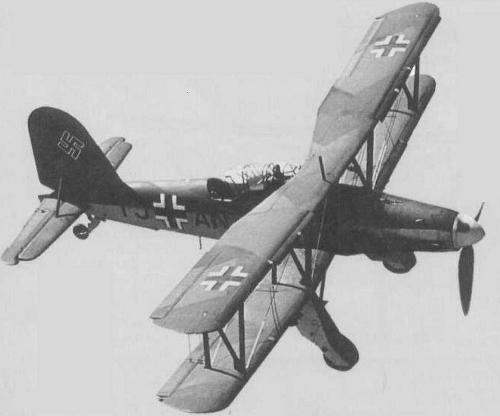
The Fieseler Fi-167 aircraft had a ridiculous amount of high-lift devices. It is said that Gerhard Fieseler during a demo sank the aircraft from 9800 ft to 100 ft, practically over the same spot while having full control over the plane. Ths is probably the aircraft with the most slats and flaps ever built. The Fi-167 had 2 automatic and independent slats on each wing – very exciting, but it will be hell to model. Not only were there a lot of high-lift devices, but they were also huge. A total of 10 percent of the chord is slats and 20 is flaps approximately.


Fieseler Fi-167 – Upper wings

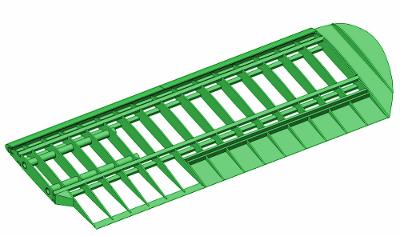
The upper wings are of the “candy-bar” design, i.e. they are not tapered towards the wing-tip.

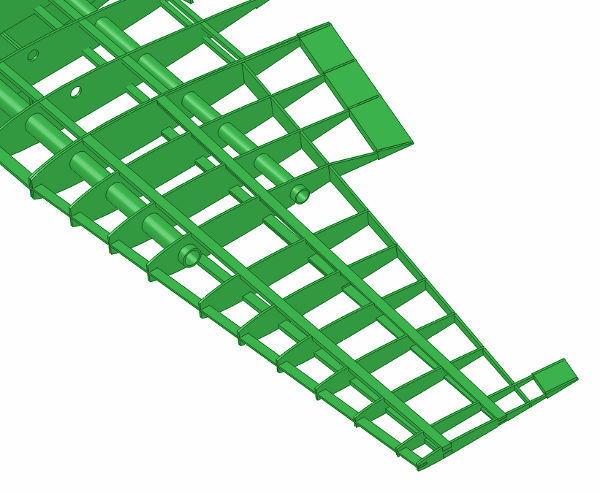
Using the Goettingen airfoil, I have drawn the top wing in CAD.


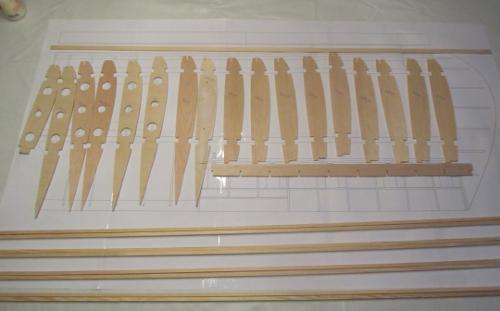
I then cut out the wing ribs. I did this with a scroll-saw for the ply wood parts, and with a scalpel for the balsa parts. If you do not have a scroll-saw, you can use a fret-saw, a hacksaw, or practically any other saw. cut 1 or 2 mm outside the line, and sand down to the line for the best results.


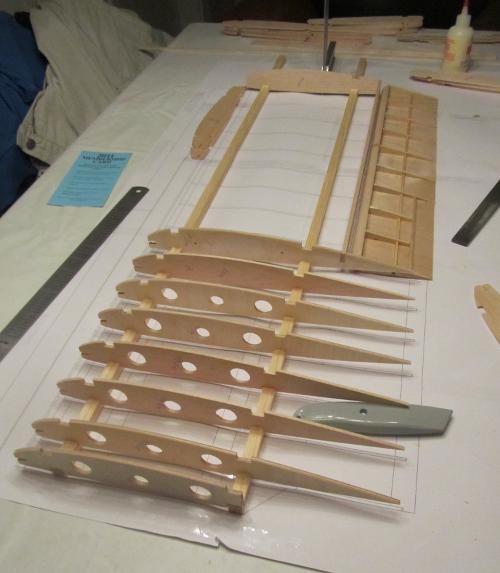
Finally, I  glued it all together using white wood glue. I prefer this glue for spruce, as it penetrates into the wood and gives a stronger joint than i.e.cyanoacrylate (superglue).


Fieseler Fi-167 – Wing tips

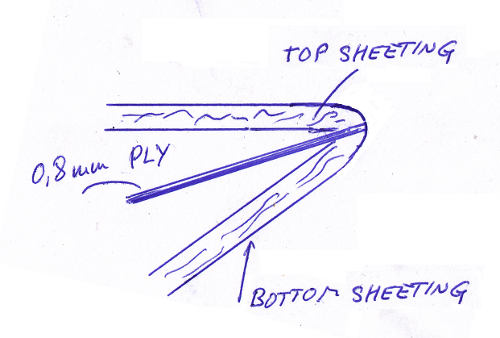
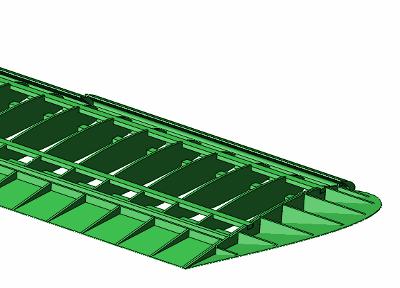
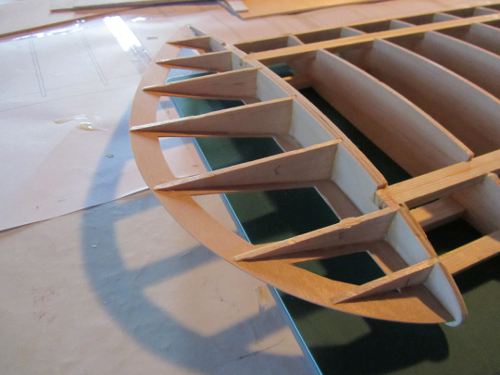
The wing-tips on this aircraft proved a bit of a headache. It is not the normal shape, but the top of the wing is flush all the way to the tip.

After a lot of head-scratching, here is what I came up with.

…and drawn in Alibre.

… and when cut from wood.


Fieseler Fi-167 – Flap hinges

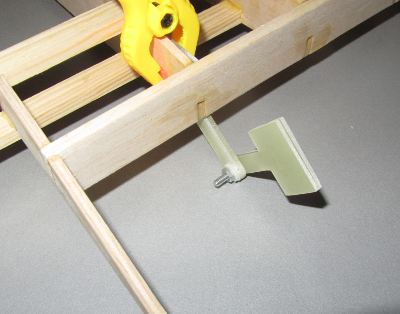
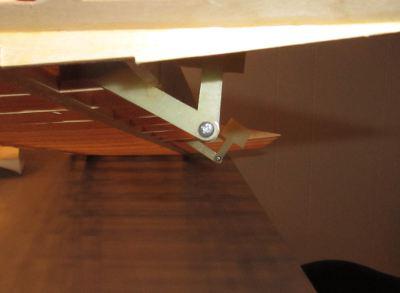
Since my order for wood still has not arrived, I decided to work on the flap hinges. I cut them from PCB material.

Here is the hinge dry-fitted to the top wing. I quickly realized that a single layer of PCB is not enough, and I will have to cut some more. The two hinge parts are joined with a nylon bushing and an M3 screw and lock-nut.


Here is the wing seen from the side. Yes I know the hinge-shape is slightly wrong. The vertical part should be more rounded, and the part to the left should be a bit fatter. I will clear that up in the CAD drawing and make a new set.


Fieseler Fi-167 – Flaps

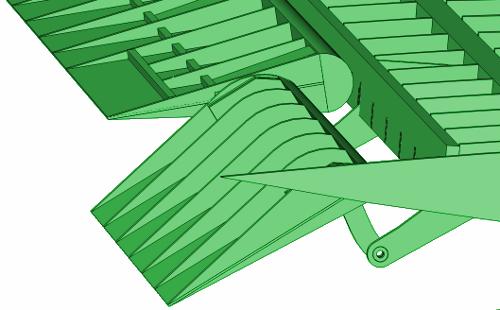
I spent all day drawing the flaps in CAD. I just couldn’t wrap my head around it.  The 3-view, and the panel lines on the plastic model, had me completely stumped. Since, I do not have a photo of the top side of the lower wing, I could not confirm it, and nothing seemed to match. I have literally drawn every type of aileron, flap and hinge combination in the book, including Friese types. The only 3-view showing the flaps correctly, is the ugly coloured one from Germany.

Anyway, I got there in the end.

Fieseler Fi-167 – Fuselage

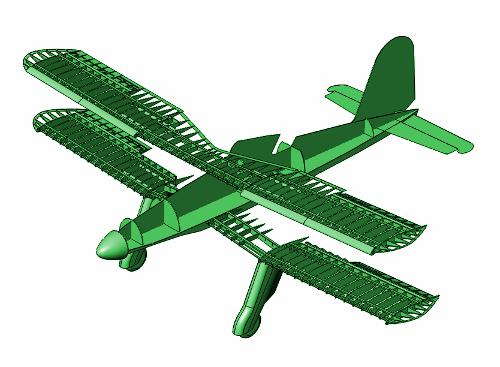
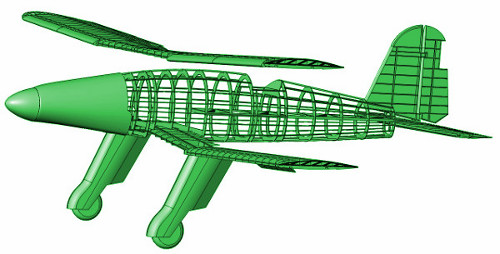
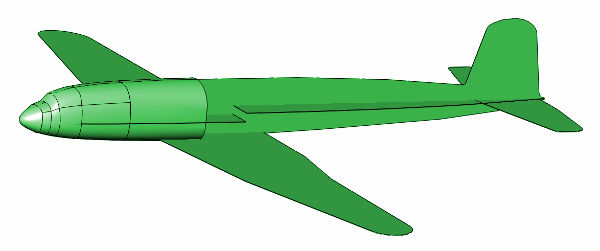
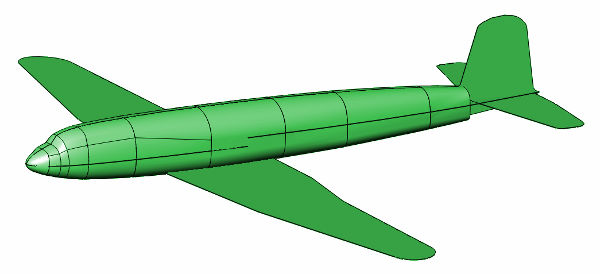
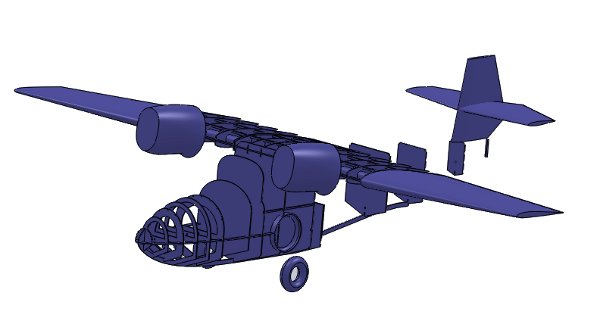
I have been looking at the fuselage formers in the 3-view, trying to figure out how they were originally created. So far, I have figured out that the top of the fuselage, from the thrust-line and up, was, in essence, elliptical in shape. I have not yet figured out how the lower parts were created. Since I know that they were elliptical in shape, all the way from the prop to the tail light, it will be really easy to draw in the missing ones.


I also added a rough landing gear, and “glued” it all together. I am happy with the result, but a lot of work is still required. The biggest problem will be figuring out the lower part of the fuselage.

Fieseler Fi-167 – The word is out!

The word is getting out, that I am working on the Fieseler Fi-167. One of the leading UK plastic-modelling website now links to me. Together with the link from the Italian modelling forum, I should get more visitors, which is great.

Fieseler Fi-167 – Fuselage cleanup

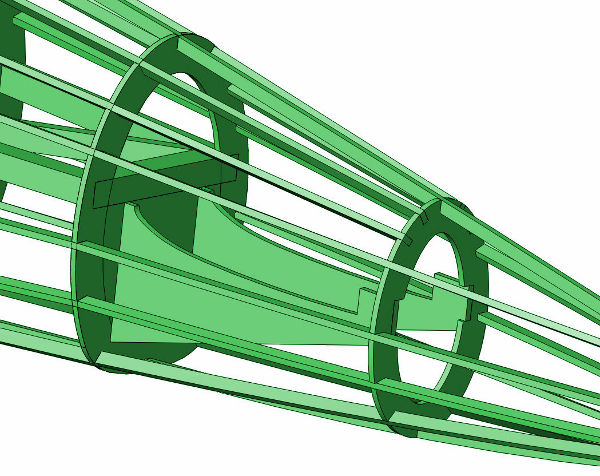
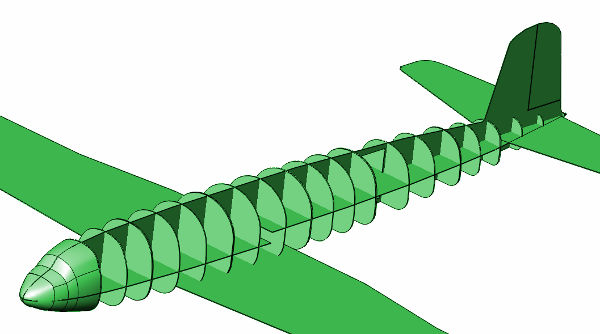
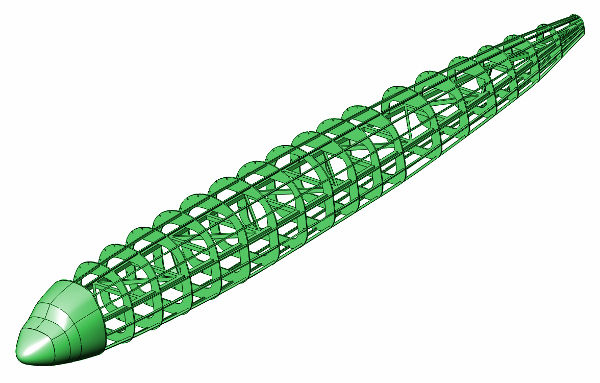
I have spent the entire day cleaning up the fuselage. I decided to use a crutch and stringers. There are 16 stringers all the way around the fuselage. They are simply there to prevent the fuselage from twisting while the sheeting is added.


Fieseler Fi-167 – Empenage

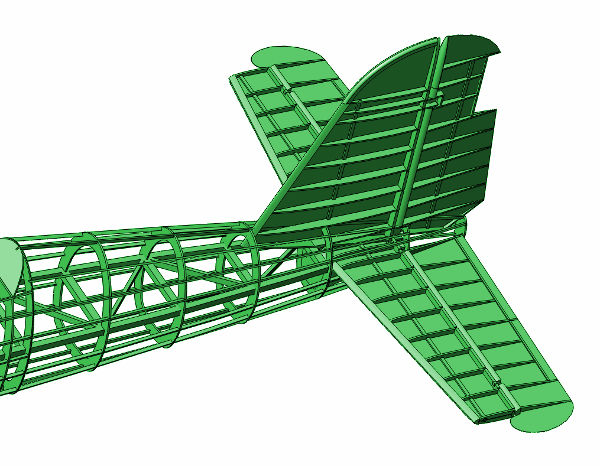
Yesterday I drew the tail. It consists of a crutch that the elevators can rest on. The idea is to build the crutch first, then glue in the lower longerons, then the sheeted elevator and then the upper longerons. The fuselage will be sheeted with balsa afterwards. Next step is to do the same with the rudder.


Fieseler Fi-167 – Engine mounting box

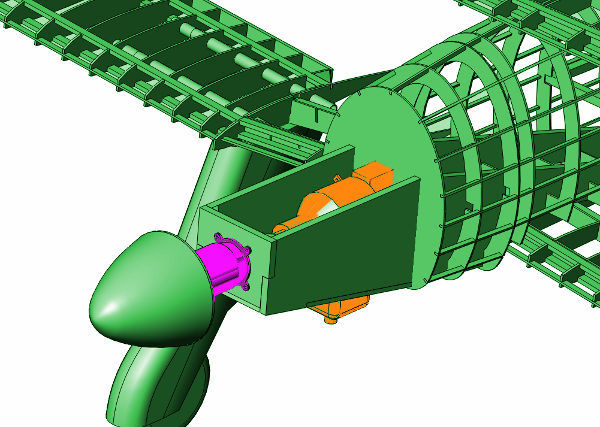
I have started on the engine mounting box. There are two engine options. 1) A Hacker A60L electric brushless motor, and 2) A ZDZ-40 petrol engine. The Fieseler Fi-167 has a very long and narrow cowl, and these were the only two engines I was was able to fit, without a huge hole in the side of the airplane. The ZDZ-40 moved back 20 cm will fit the engine cooling fins where the actual cooler was on the Fi-167.

The engine mounting box should be assembled first, so I have to figure out how to make the firewall and how to fix the crutch and the fuselage formers to the box.


Fieseler Fi-167 – Tail

I have fixed some strength issues in the tail. First of all, making room for the pushrods etc., proved a headache. It is getting really crowded back there.

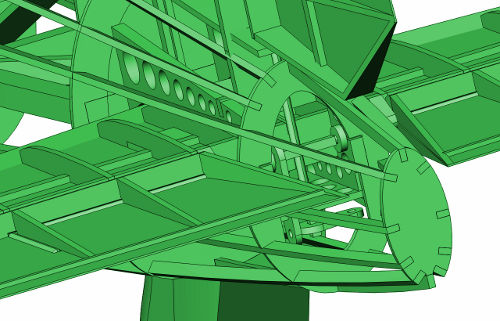
Next I will be the strengthening up of the former where the tail-wheel is going to be attached.


Fieseler Fi-167 – Landing gear

I have now done the landing gear. Despite being non-retractable, there is quite a bit of mechanics in there. I hope I will be able to machine the parts.


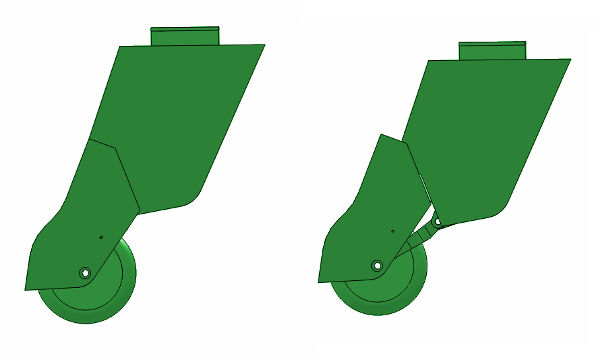
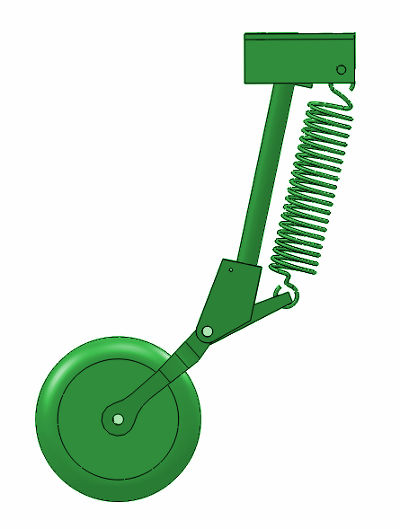
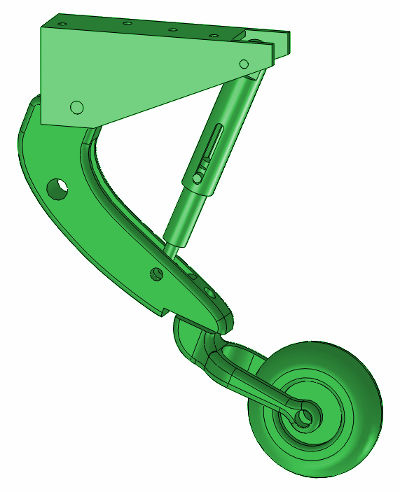
Fieseler Fi-167 – Tail wheel

And the tail wheel assembly. This requires the machining of a shock absorber. I hope this goes well.


Fieseler Fi-167 – Related posts

Focke-Wulf FW-200 Condor – Introduction

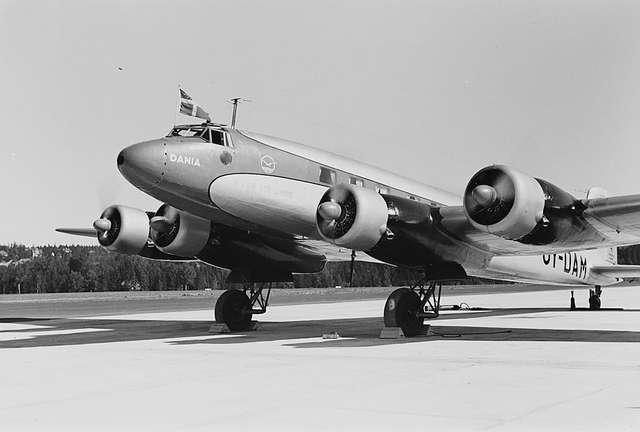
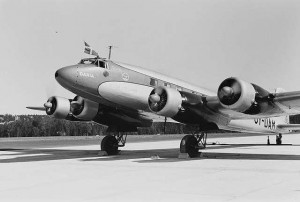
The Focke-Wulf Fw-200 was developed before WWII as a long-range passenger airliner. It was built to the specifications of Deutsche Lufthansa, and was developed by Kurt Tank. It first flew in 1937. It was an all-metal, four-engined monoplane capable of carrying 25 passengers up to 3,000 km. The Fw-200 was purchaced by Det Danske Luftfartsselskab (Danish Airlines) and was used for passenger transport by DDL well into the war.

The Fw-200 was the first aircraft to perform a non-stop flight across the Atlantic, from Berlin to New York, causing quite a stir in the USA, and a lot of pride in Germany. The trip took place on the 10th of August 1938, and took approximately 24 hours. The return trip took less than 19 hours.

The German Fw-200’s were modified for war-time use, and was particularly successful over the atlantic for maritime partols and anti-submarine work. The war-time modifications were installation of gondolas and machine-guns, as well as radar.

Hitler had a Fw-200 converted from airliner status to personal aircraft. It was marked D-2600 and named Immelman III, in honour of WWI flying ace Max Immelmann.

After the war, a large number of surplus Boeing DC-3’s at knock-down prices, meant that the otherwise superior Focke-Wulf Fw-200 didn’t stand a chance.  However, the Focke-Wulf Fw-200 was so far ahead of its time that, had it not been for the war, Focke-Wulf might have been one of the most popular airliner manufacturer today.

A single Fw-200 was raised from a lake in Norway in the 1990’s and is being restored in Berlin.

Specifications:

Crew: 5
Capacity: 17-25 passengers or 30 fully-armed troops
Length: 23.45 m (76 ft 11 in)
Wingspan: 32.85 m (107 ft 9 in)
Height: 6.30 m (20 ft 8 in)
Empty weight: 17,005 kg (37,490 lb)
Max takeoff weight: 24,520 kg (50,057 lb)
Powerplant: 4 × BMW/Bramo 323R-2 nine-cylinder radial engine, 895 kW (1,200hp) each
Maximum speed: 360 km/h (195 knots, 224 mph) at 4,800 m (15,750 ft)
Cruise speed: 335 km/h (181 knots, 208 mph) at 4,000 m (13,100 ft)
Range: 3,560 km (1,923 nmi, 2,212 mi)
Endurance: 14 hrs
Service ceiling: 6,000 m (19,700 ft)
Armament: 1 × 20 mm MG 151/20 cannon, 4 × 13 mm MG 131 machine guns
Bombs: Up to 2,100 kg (4,360 lb)


Focke-Wulf FW-200 Condor – 3 View

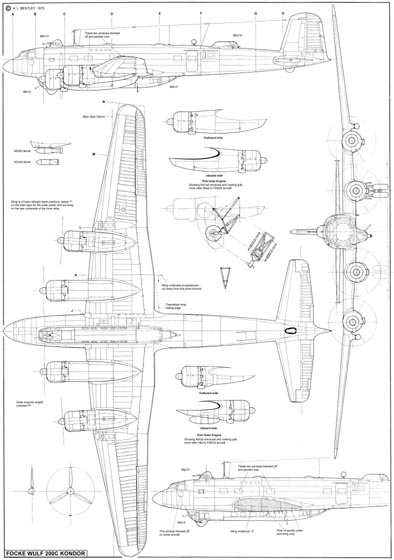
The best 3-view in the world of this aircraft was drawn by genius Arthur L. Bentley in the UK in 1975. They are still available directly from Arthur at his web-site here. If you are serious about the Fw-200, you MUST get a copy of these drawings.

I will be using these drawings as the basis for my model.


Focke-Wulf FW-200 Condor – Manuals

I will be receiving flight manuals and technical documentation from a source in Germany soon. When they arrive, I will be able to start designing a model of this amazing aircraft.


Focke-Wulf FW-200 Condor – CAD work starts

I have loaded the 3-views into the CAD software and made a simple model using the side-, top and front views. This is just to see that all the 3-view drawings are consistent, when it comes to dimensions. Also, I will “glue” the fuselage formers to the model.

Even with just the outline traced, the sleek aerodynamic lines of this aircraft are clearly visible.

Focke-Wulf FW-200 Condor – Manuals Arrived

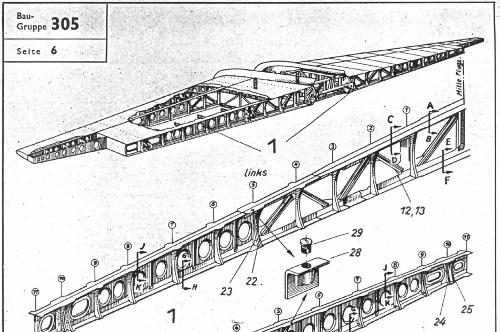
I finally received spare parts catalogs, technical manuals and pilots notes for this aircraft from Germany. There are almost 2500 pages, and really useful, both when it comes to designing, and, in particular, the detailing of the model.

Focke-Wulf FW-200 Condor – Great Surprise

I have started working with world-renowned aviation artist Juanita Franzi on the FW-200 Condor. Juanita has been illustrating numerous aviation books and magazines.

I am very excited to be able to share information and ideas about this great aircraft with her.

Do check out her amazing art at: www.aeroillustations.com. It is well worth a visit.


Focke-Wulf FW-200 Condor – Front Fuselage

I have started lofting the fuselage. It’s boring work, and all the little imperfections in the 3-views show up here, so after the lofting, there will be some cleaning up to do.

Focke-Wulf FW-200 Condor – Nose Cone

Is it just me, or does the nose cone in my 3-view look different from the nose cone used on the commercial FW-200 shown in the photo in the top post?


Focke-Wulf FW-200 Condor – Fuselage lofted

The fuselage has now been cleaned up and lofted (with the exception of the last fuselage station). It really looks great. I can’t wait to get this aircraft in the air.

Focke-Wulf FW-200 Condor – Fuselage formers

The last piece of the fuselage was lofted, and the formers were cut out. The formers are located where there are no windows and doors.


Focke-Wulf FW-200 Condor – Longerons done

The fuselage longerons are done. Nothing special to remark here.

Focke-Wulf FW-200 Condor – Airfoil

The FW-200 Condor used the NACA 2318 airfoil.

Focke-Wulf FW-200 Condor – Book

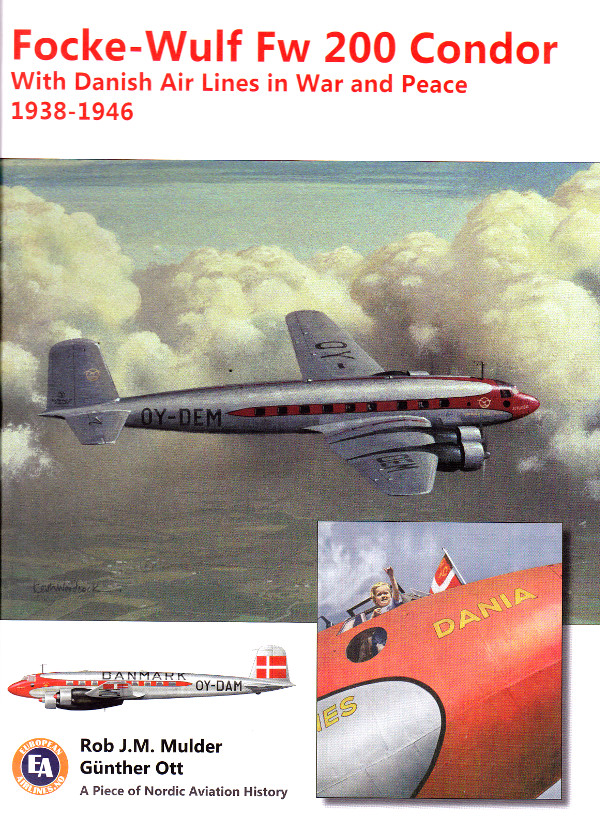
The book about the FW-200 Condor that I supplied technical information to, is now available. Whether you are interested in the Danish Airlines or not, this book is full of amazingly detailed photos of the Focke-Wulf Fw-200.You can acquire the book at Rob Mulder’s website: europeanairlines.no


Focke-Wulf FW-200 Condor – Cockpit

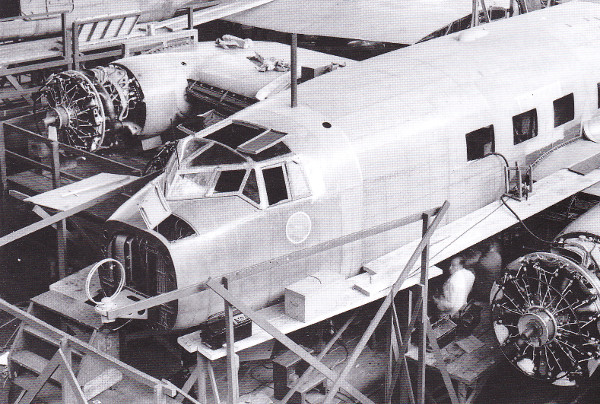
In the book mentioned in the post above, about the Fw-200 Condor, I found this interesting photo, showing why the cockpit shape was so difficult to grasp. It looked different from practically every angle. Now I know why.


Focke-Wulf FW-200 Condor – Related posts

Fokker F.XII Introduction

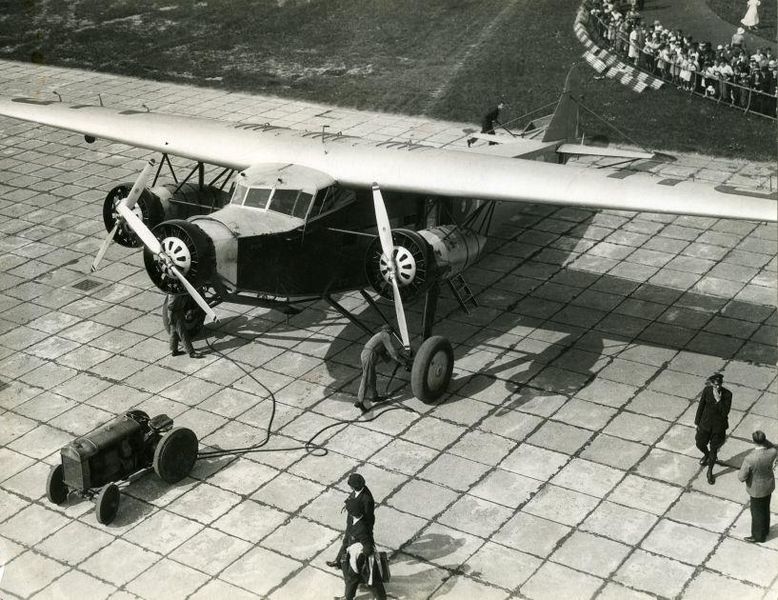
This trimotor aircraft was designed by the Fokker factory in Holland. Only 13 were built, two of these under license in Denmark by Orlogsværftet in Copenhagen. The Danish F.XII’s were build during 1933, with minor modifications requested by the customer, Det Danske Luftfartselskab. The aircraft entered service the day after the test flights were completed!

The structure of the F.XII was typical for Fokker. The fuselage was of welded steel tubing and the wings made out of wood. The ailerons were likewise made out of wood, and the empenage made from welded steel tubing covered by canvas. The crew consisted of a pilot and a radio operator. The cabin was 5 meters long and 2 meters tall, and had seating for 16. The exhaust from the center engine was used to heat the cabin.

Specifications

Wingspan: 23.02 m
Length: 17.80 m
Height: 4.75 m
Empty Weight: 4898 kg
Full Weight: 7750 kg
Max speed: 248.5 km/h

Fokker F.XII 3-View

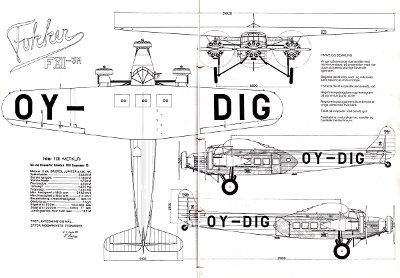
I have acquired a decent 3-view of this aircraft. In fact, it is more than decent. I got it from the set of original drawings used by Orlogsværftet to build the actual full-size aircraft.

Scale dimensions:

Wing Span: 2.30 m
Length: 1.78 m
Height: 0.47 m


Fokker F.XII – Related posts

Grumman S2F Tracker – Introduction

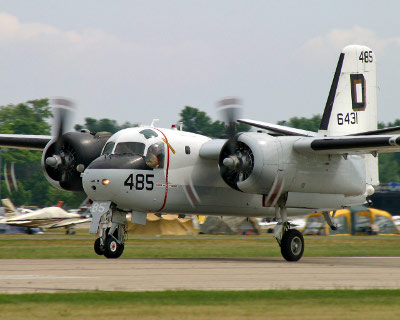
I have started one more aircraft. This time the Grumman S2F Tracker. This model is a twin-engined Navy plane, originally designed to search for enemy submarines. This plane existed in at least ten different versions. I’ll first try to figure out the different versions, then look at the different colour schemes, and then which model I have 3-views for. THEN I will select one to do. I will possibly do several build-options.

ModelS2FSpecial
Version-1-2-2P-3-3SUS-2xS-2TTF-1WF-2
UseSubNukeP.R.A
B'Pas
C'Trg
C'go
Pas
Sub
Length43'6"43'6"43'6"43'6"43'6"43'6"43'6"43'6"45'4"
Wing69'7"69'7"69'7"72'7"72'7"69'7"??72'7"
Stab22'4"27'2"27'2"27'2"27'2"????
Rudder111111112
EngineRad'lRad'lRad'lRad'lRad'lRad'lTurboRad'lRad'l
Scoop---BigBig--??
Camera--Yes------
BayYesExtExtYesYesExtYesDeepYes
RadarYesYes------Dome
Tail MADYesYes-YesYes-Yes--
RadomeYesYes-YesYes-Yes--
Sonobuoy108-1616--??
Wing FoldYesYesYesYesYesYesYesYesFold
AntennaYesYesYesExtDomeYesDomeYes-
LightYesYes-YesYes-???
Pylons6Ext-66----
Pass'ngr-----4-9-
Windows-------Yes-
Tail Wheel--------Yes

Table showing all Grumman Tracker versions with the exception of the Canadian Tracker, the S2F-1T which is the trainer version of the S2F-1 (all armament and radars removed), and the S-2G rebuild.

Grumman S2F Tracker – Build-Options

OK, so now that we have a better picture of the different options we see that there are some minor options, and some major changes.

Minor Options:

  1. Radar over cockpit
  2. Tailwheel
  3. Windows
  4. Tail MAD
  5. Air Scoop

Medium Modifications

  1. Stabilizer
  2. Wing-tips
  3. Camera

Major Modifications

  1. Extended Bomb bays
  2. Deeper bomb bays
  3. Wing-fold
  4. Lengthen the fuselage
  5. Dual-rudder

Problem is I like both the S2F and the WF-2, which means some major modifications. Let’s see how this works out.

    Grumman S2F Tracker – 3-Views

    Time to import the 3-views. This airplane is gonna be a hell of a project. There are a trillion different things that can move, and a trillion different build-options.

    • Tail-boom.
    • Radome.
    • bomb-doors.
    • wing-folding.
    • Landing gear.
    • Spotlight.
    • Arrestor hook.
    • Wing-pylons.

    WOW!

    Grumman S2F Tracker – Plastic model

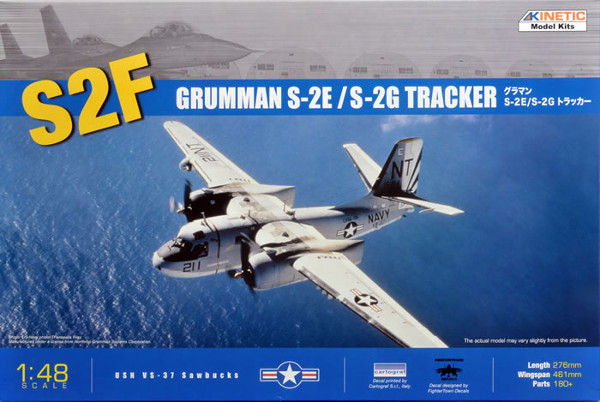
    kinetictrackerI had already started importing the 3-views that I found online, but then I found an S2E / S2G tracker plastic kit at an airshow. It is from Kinetic Model Kits and scaled at 1:48. It is a really really nice kit, and now I have to figure out how that fits in with the models that I want to build – the S2F-3 and the WF2. Geez, all these combinations makes it really complicated.

    By multiplying the size of the plastic kit by 48, I get the original size of the S2E/S2G as l: 43’6″ and w: 72’7″, so at least that fits.

    Next problem is the size of the WF-2. According to my table in one of the above posts, this ties in with the WF2 being an S2F-3 with a different (and longer) tail section, due to the radome. If this is true, I can make only one fuselage, and one set of wings, and simply add the radome and do a dual rudder. the rest will remain the same – I need to study it a bit more.


    Grumman S2F Tracker – Related posts

    Grumman Widgeon – Introduction

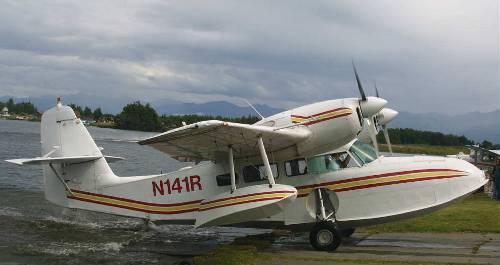
    The first time I saw the Grumman Widgeon I just knew I had to make a model of it. I apparently have a thing for twin engined aircraft. The Widgeon is a small amphibious aircraft built for the US Coast Guard in 1941 and has also been used in the UK, Thailand and a few other countries. The G-44A was a redesigned aircraft with higher load capacity. I will be building the G-44A version.

    Specifications

    Crew: one, pilot
    Capacity: 5 passengers
    Length: 31 ft 1 in (9.47 m)
    Wingspan: 40 ft 0 in (12.19 m)
    Height: 11 ft 5 in (3.48 m)
    Wing area: 245 ft² (22.8 m²)
    Empty weight: 3,189 lb (1,470 kg)
    Loaded weight: 4,500 lb (2,041 kg)
    Max takeoff weight: 4,500 lb (2,500 kg)
    Maximum speed: 139 kn (160 mph, 257 km/h)
    Range: 800 nmi (920 mi, 1,481 km)
    Rate of climb: 1,000 ft/min (305 m/min)


    Grumman Widgeon – 3-View

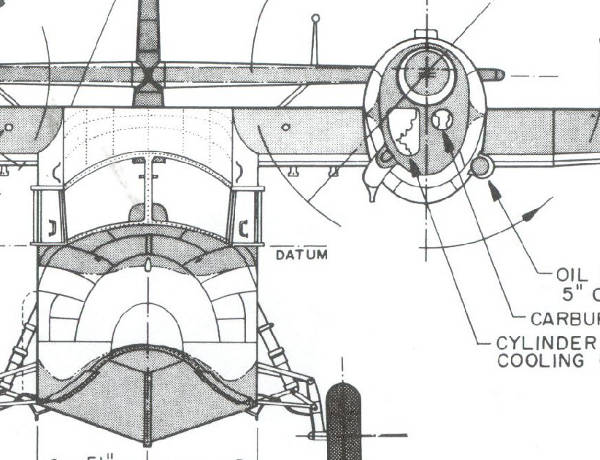
    I will been using an old 3-View originally drawn by Paul Matt. It looks great and is very detailed. For any difficulties, I will refer to the walk-around I took while in Thailand.

    Grumman Widgeon – Status Update

    This is as far as I got, before the server crash. I will continue to work on the Grumman Widgeon, as well as try to recreate the web-site contents.

    Grumman Widgeon – Landing Gear

    Just a quick one here. I have received very detailed drawings of the Widgeon landing gear. It seems to be quite difficult to get the mechanics right for it to operate reliably. I have not gotten to that stage yet, but at least I have the drawings.
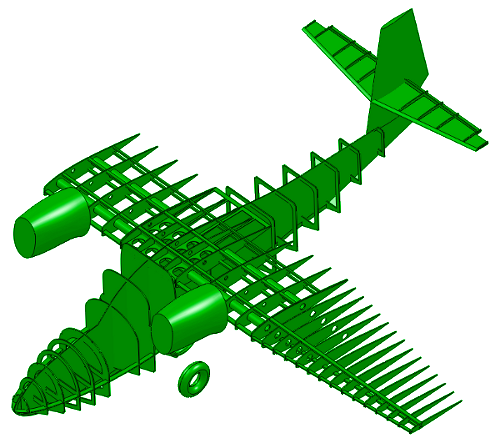
     

    Grumman Widgeon – Cleanup

    I felt like cleaning up the fuselage today. It was badly needed. I did not finish it yet, but it starts to look useable.
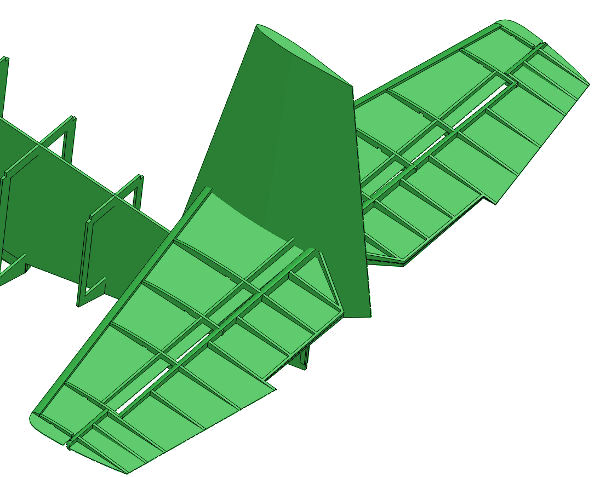
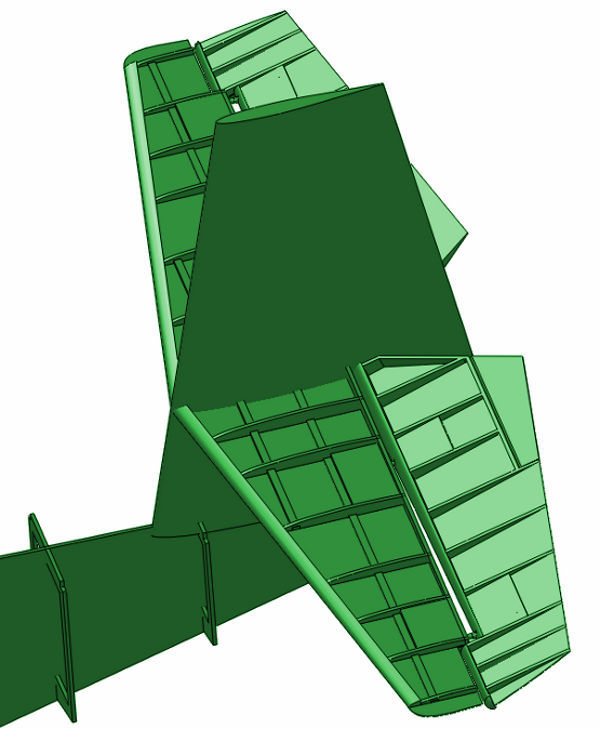
    Grumman Widgeon – Elevators

    I managed to get a couple of hours in on the Widgeon this evening. I hope to be able to get a couple of hours free for my models every evening from now on.

    Grumman Widgeon – Elevators Done

    The idea of designing airplanes a couple of hours a day after work seems to help get stuff done. The elevator is now done. There are four hinge-points, two on each side at the scale positions. Next: The rudder.


    Grumman Widgeon – Outer wings

    I have now drawn the outer wings. They are not too long, and do not need to be extremely stong, so a standard wing arrangement will be fine. Next I will look at the ailerons. The drawing is interesting – the inner side of the aileron is not perpendicular to the trailing edge. I’ll have to check whether that is correct, before making one that works.

    Grumman Widgeon – To-do List

    I still have to do the following:

    • Elevators.
    • Wings.
    • Ailerons.
    • Rudder.
    • Clean up fuselage.
    • Rudder/elevator/fuselage join area including struts.
    • Fuselage stringers.
    • Wing/fuselage join area.
    • Engine mounting box.
    • Engine pods.
    • Struts.
    • Landing gears.
    • Lumps & bumps.
    • Do R/C installation.

    Grumman Widgeon – Related posts

    Hansa Brandenburg W.29 – Introduction

    Coming soon…

    Hansa Brandenburg W.29 – Related posts

    Hawker Dankok – Introduction

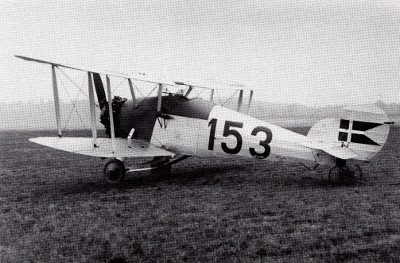
    This aircraft was the first real fighter aircraft in the Danish Air Force. It was a biplane, produced by H.G. Hawker Engineering Co., Ltd. The Dankok was a modified version of the company’s Hawker Woodcock biplane. Three were ordered, and the remaining were made under license in Denmark, by Orlogsværfted – originally a naval ship builder. A single Dankok lives in a museum in Stauning, Denmark.

    Specifications

    Wingspan: 34′ 6.5″
    Length: 25′ 6″
    Max Speed: 143 m.p.h.
    Cruise Speed: 103 m.p.h.
    Endurance: 3.5 hr.
    Service Ceiling: 21,500 ft.
    Armament: 2 x Madsen 7.7 mm machine guns.