




 31/12/2009
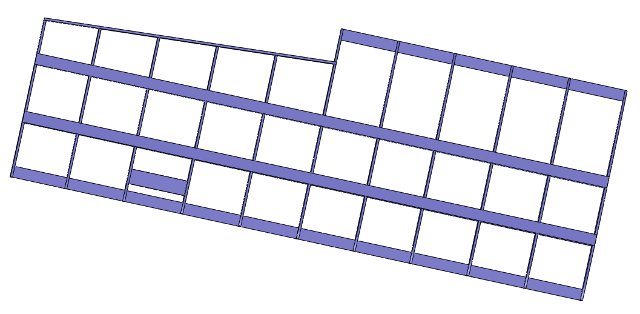 The O-Maskine wing-construction was fairly standard for a plane of that era. However, the wing spar had the leading edge covered in plywood – like the Fokker D.VII. This allowed for an almost perfrect cantilever design. The wings had very thin struts but, of course, no flying wires. The O-Maskine had the petrol tank mounted in the top wing, making the wing center thicker than the wing-tips.
The only real unknown is the actual wing-profile used. I will be using the airfoil shown in the 3-view. Although it may not be entirely correct, it is the one that best matches the available photos.
 The front view of the 3-view shows that the center section with the fuel tank has a fixed wing thickness, and the wings themselves were tapered towards the wing-tips.
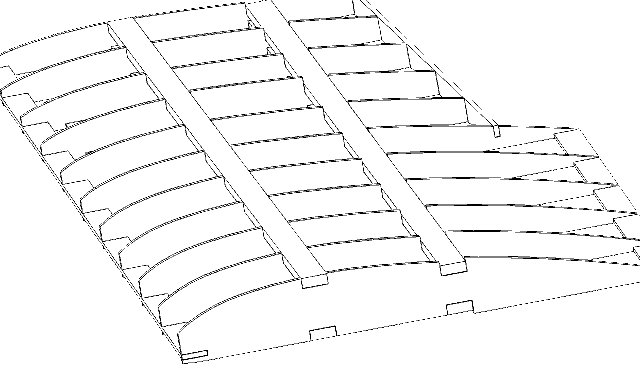
The actual construction of the wing is done by drawing the outline of the wing profile at each end of the wing, and then lofting the wing. After that, the wing is “sliced” into 3mm thick wing ribs at the proper locations. Finally, cut-outs for spars etc. are added to the ribs. The cut-outs are done so that the different pieces interlock, making alignment easy during construction.
The next step is to insert hard-points for the mounting of the wings, the wing-struts, servos and aileron hinges.

Leave a reply