




 02/01/2010
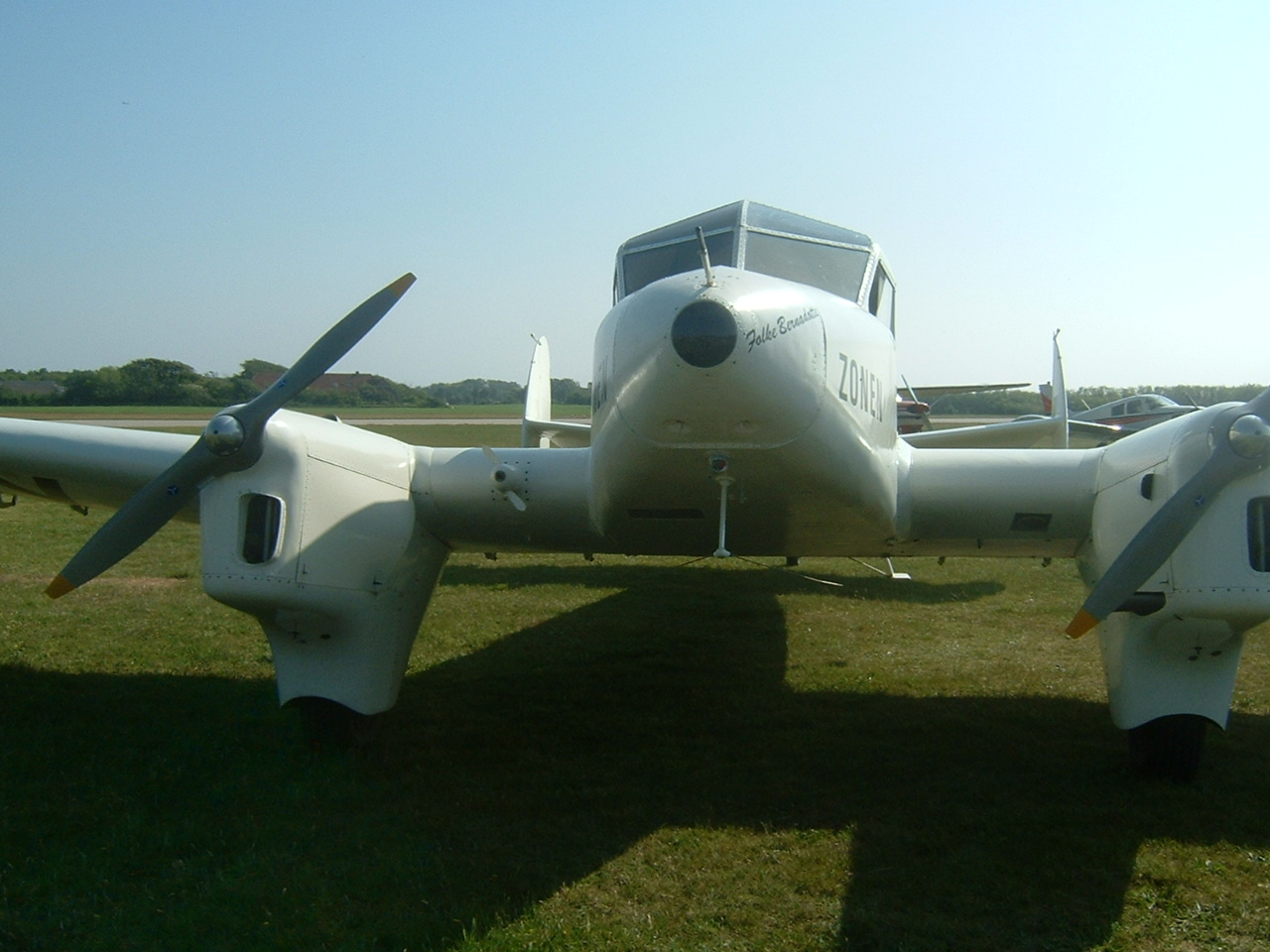
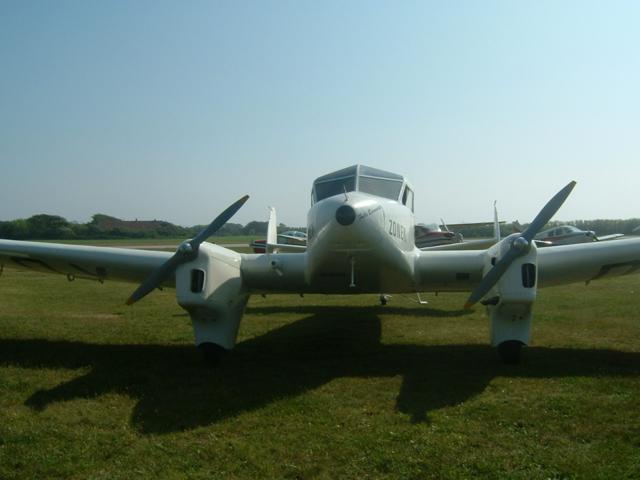 The KZ-IV ambulance plane was constructed on the request of Eigil Juel Wiboltt, managing director of Zonen Redningskorps (ambulance service). Zonen had a Monospar S.T.25, but it had proven too small, and the company required a larger aircraft.
Skandinavisk Aero Industry was more than interested. The company had survived on building various metal products during the war, so when the opportunity arose to build aircraft again, they jumped at the opportunity.
The design proved very challenging. The requirement were for take-off from small islands and forest clearings, and powerful engines were impossible to come by during the War. SAI had a pair of 130 HP, de Havilland Major I engines, and it was decided to use these, combined with very long wings.
Skandinavisk Aero Industri was paid 100,000 DKR for the aircraft. It only covered the costs, but they hoped further orders might emerge after the war.
Everything had to be constructed from wood. Most parts were hollowed out to save weight. A total of 20,000 drawings were required. Construction started in 1942-43. Everything had to be constructed from scratch, as nothing was available. There were about 40 craftsmen working on the aircraft. However, SAI decided to move its offices from Aalborg to new buildings at Tuborg Harbour in Copenhagen, due to a lack of woodworking specialists. The aircraft was freighted to Copenhagen on a small ship.
Assembly of the aircraft continued, and the aircraft was presented to Zonen, on the 5th of February 1944. Zonen sent out information packs to over 3000 schools, and the factory had an open-house day where more than 15,000 school children came to see the aircraft.
The aircraft was test-flown from Kastrup Airport, on the 1st of March and during the following 2 month. Test-pilot was Mr. K.E. Simonsen, an employee at Zonen. It was difficult to perform all the test-flights as the Germans only allowed flights on clear days, simply so that they could monitor the aircraft in the air, and make sure it did not escape to a neutral country.
KZ-IV was an immediate success. The first ambulance flight was on the 14th of July, from Rønne to Copenhagen.
The plane was extremely popular, not only because of it’s beautiful exterior, but also because of it’s exploits. Count Folke Bernadotte and Zonen’s pilot K.E. Sørensen flew to Germany in 1945, in the KZ-IV, to negotiate with Heinrich Himmler, the head of the German Gestapo. The negotiations were a success, and the release of all Danish and Norwegian concentration camp prisoners in Germany was guaranteed. The KZ-IV was later used to transport some of the weakest concentration camp prisoners back to Denmark.
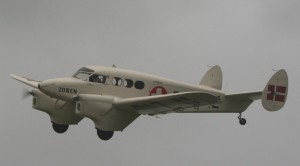 A few month later, members of the Danish government was flown to Bornholm due to the Russian bombardment of the island.
It was used to drop a giant danish flag over the capital, to celebrate King Christian X’s birthday in September 1945. The flag landed in the center of the town, on Rådhuspladsen. It was then used to airlift a countess home from Prague – a major media-event.
After the war, many sick children were taken up in the KZ-IV, since is had been discovered that high altitude would relieve the symptoms of whooping cough.
It was even used as a flying delivery room, when the wife of the Zonen chairman delivered a boy child at 750 m altitude, on her way from Vejle to Copenhagen.
All these things resulted in a huge amount of goodwill, and the plane was later named “Folke Bernadotte” to commemorate the flight at the end of the war.
The second aircraft, was ordered by Zonen, but it should take almost 3 years before it was delivered. Problems with delivery, and a factory fire in the 17th of February 1947 left the factory in ruins. The KZ-IV was destroyed, together with many KZ-VII aircraft. The reconstruction, or rebuild, of the KZ-IV was further delayed, as the plans had to be re-drawn. The second plane was finally delivered during 1949. The second plane was named “Henry Dunant”, after the founder of the Red Cross organization.
Both planes still exists today, OY-DIZ (Count Folke Bernadotte) at Danmark Flymuseum (Denmarks Museum of Flight, at Stauning), and OY-DZU (Henry Dunant) at Teknisk Museum (Technical Museum) in Helsingør. OY-DIZ is still in flying conditions and is sometimes seen in the air.

Leave a reply